
 Counter-Drone Systems
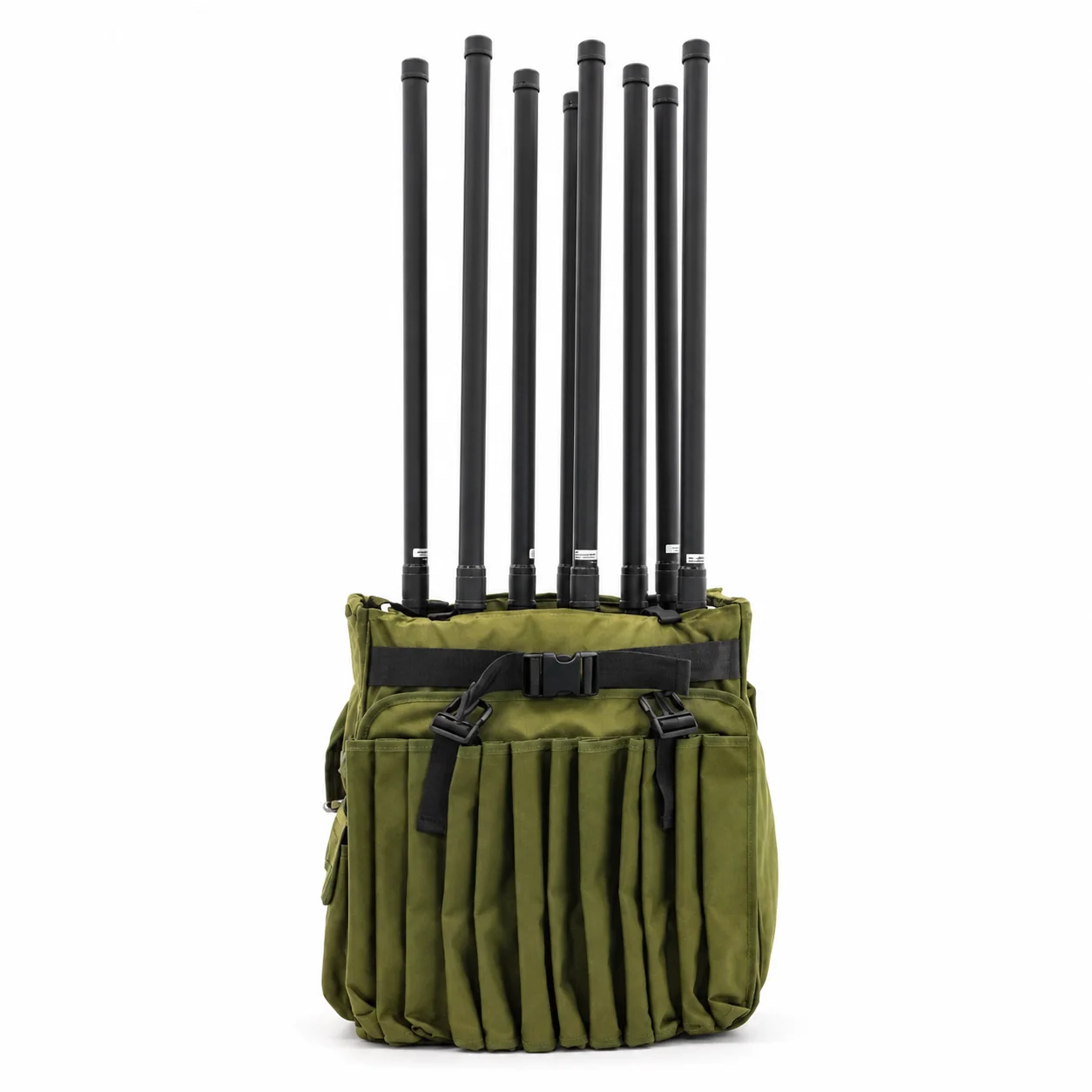
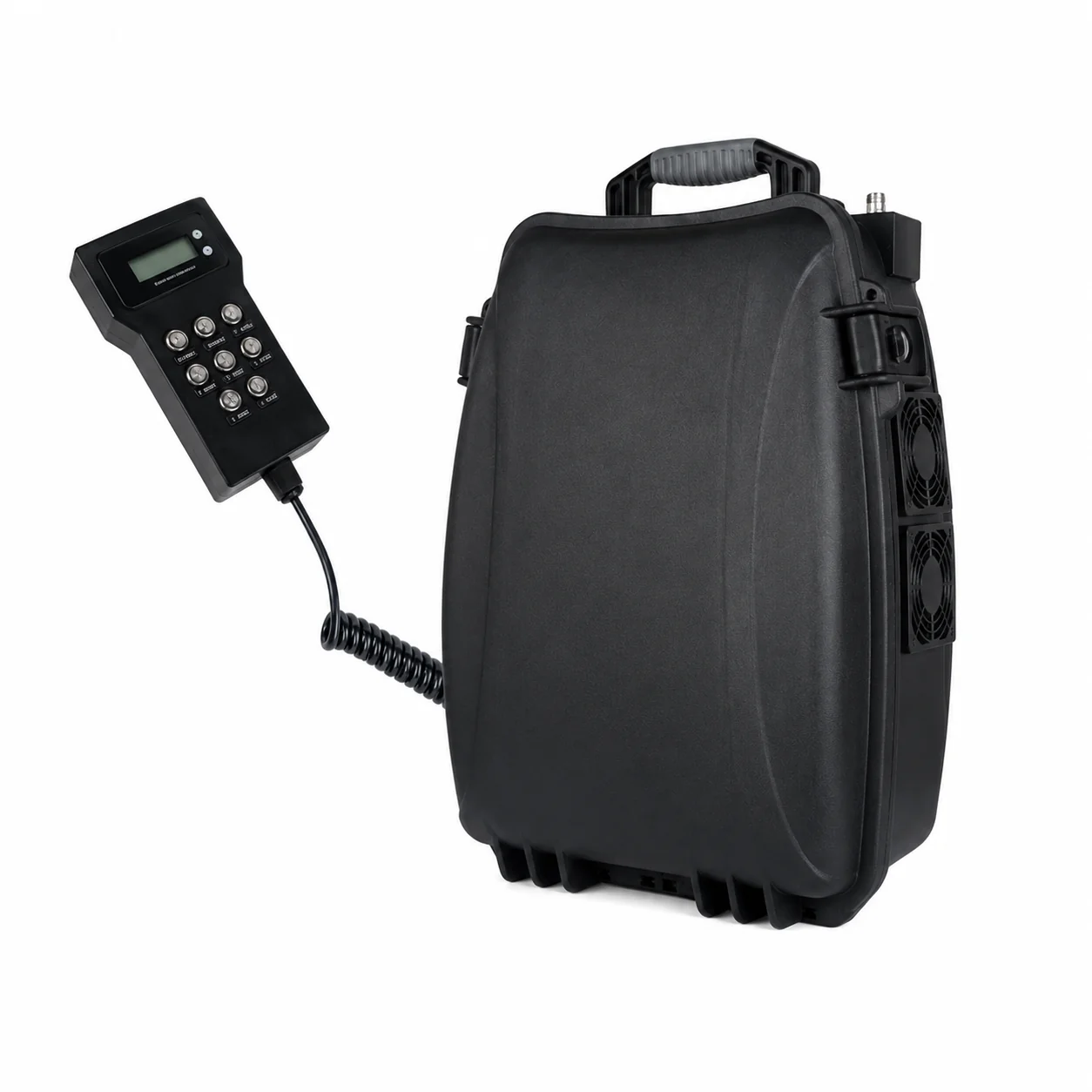
BJ012 Backpack-Mounted Counter-Drone Jammer
The BJ012 is a backpack-mounted counter-UAS ja...
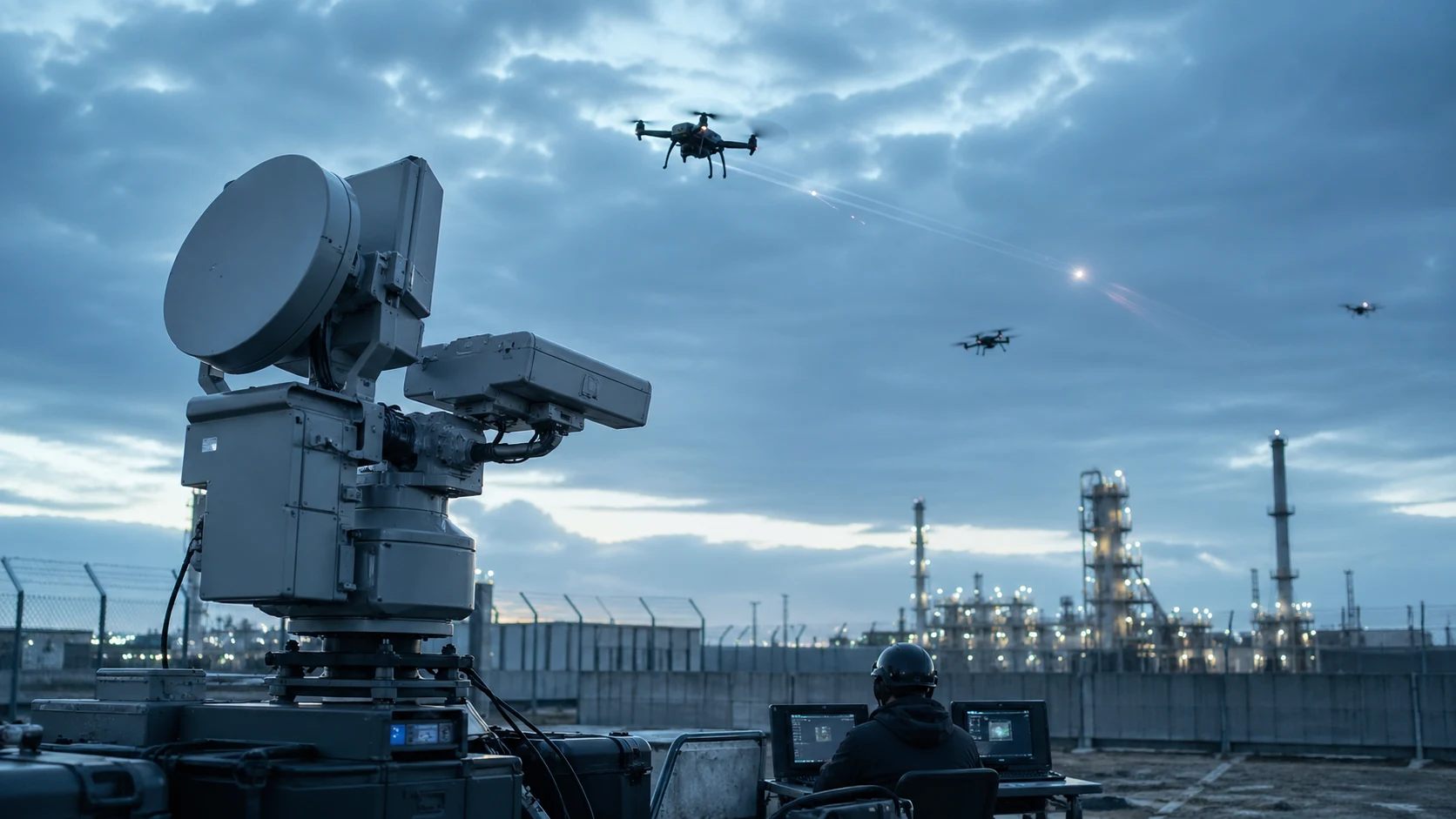
The Integrated Counter-Drone Defense System is designed for authorized low-altitude airspace protection and critical site security. It combines radio-frequency detection, low-altitude surveillance radar, electro-optical tracking, command-and-control software, RF jamming, GNSS spoofing, portable countermeasure devices, and vehicle-mounted systems into a unified counter-UAS solution.
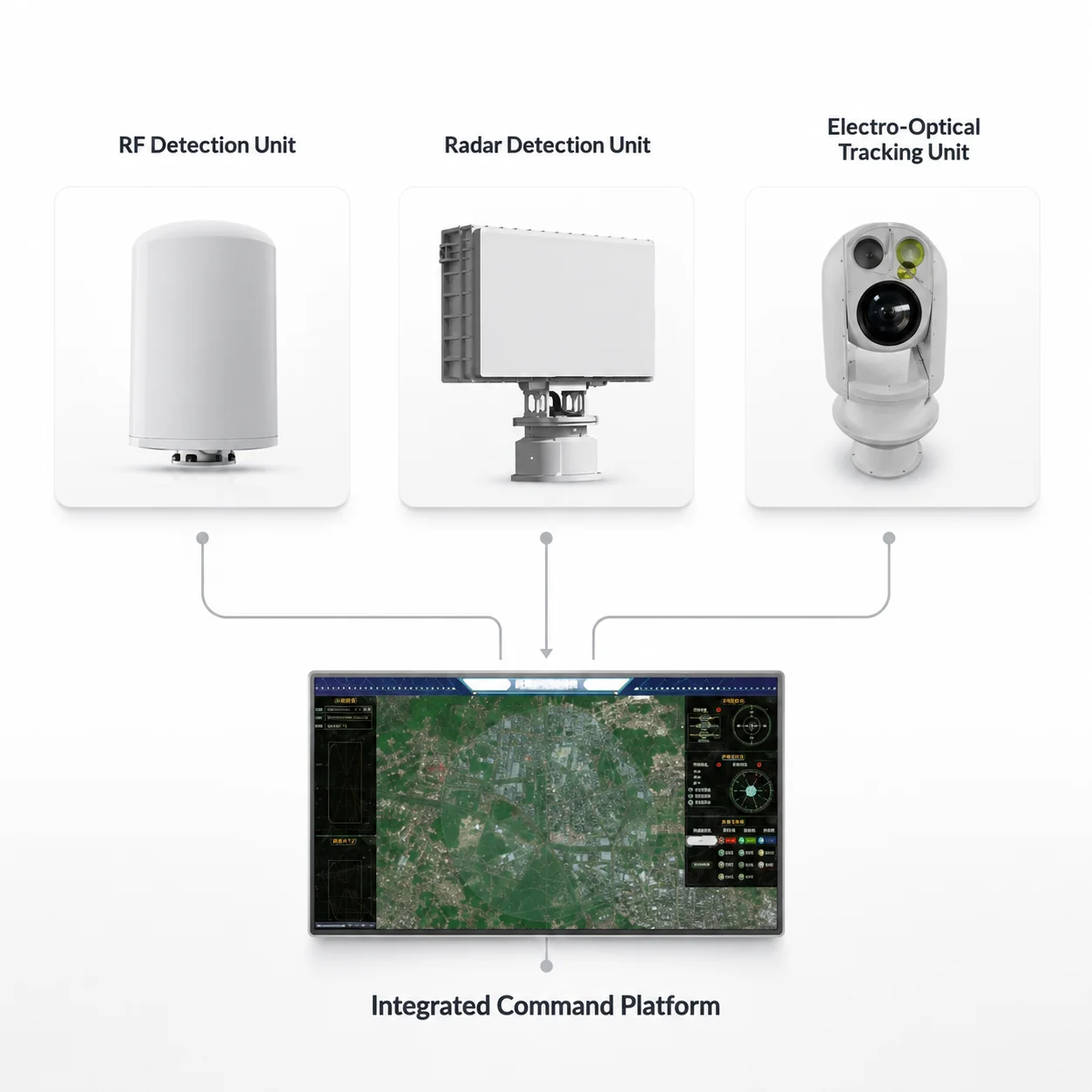
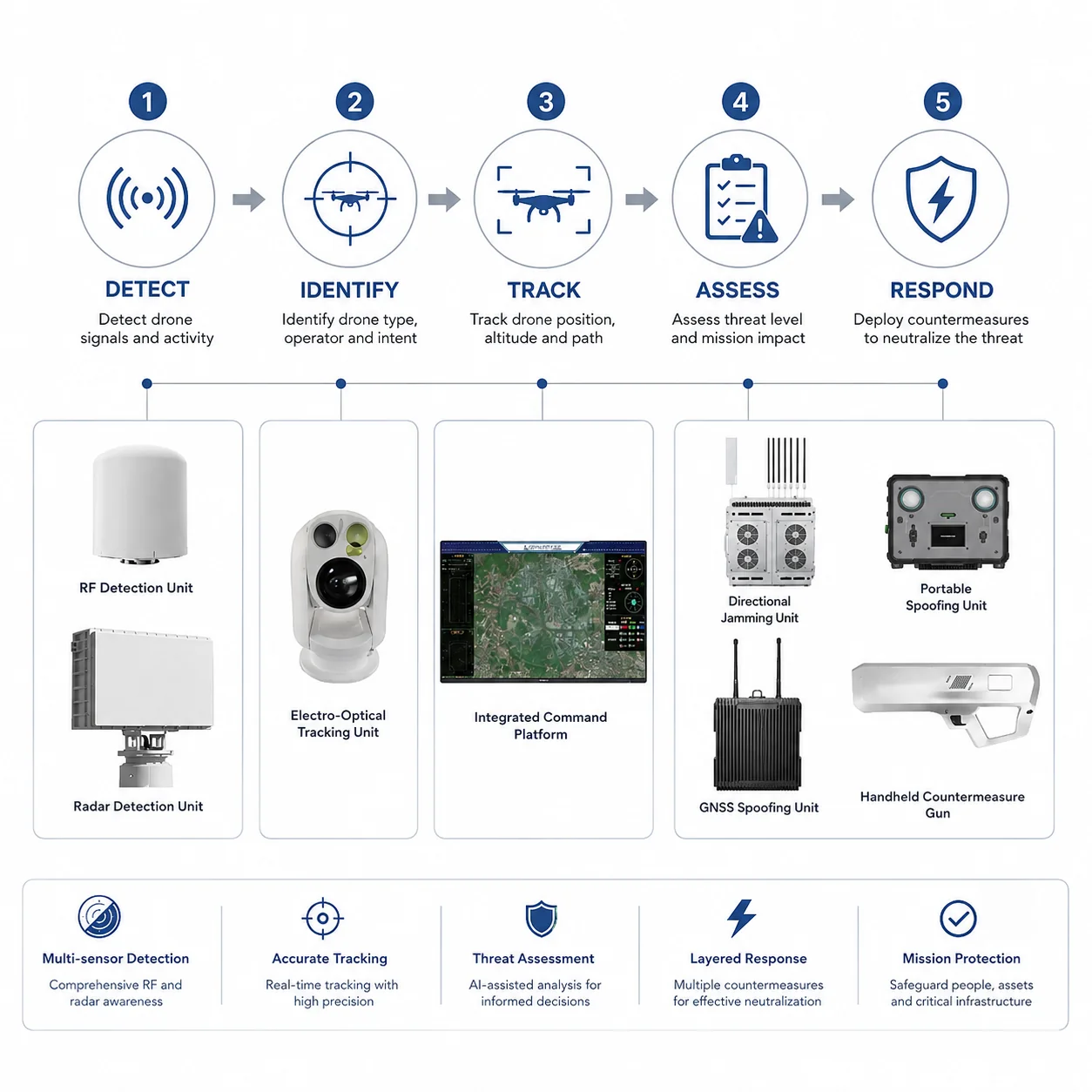
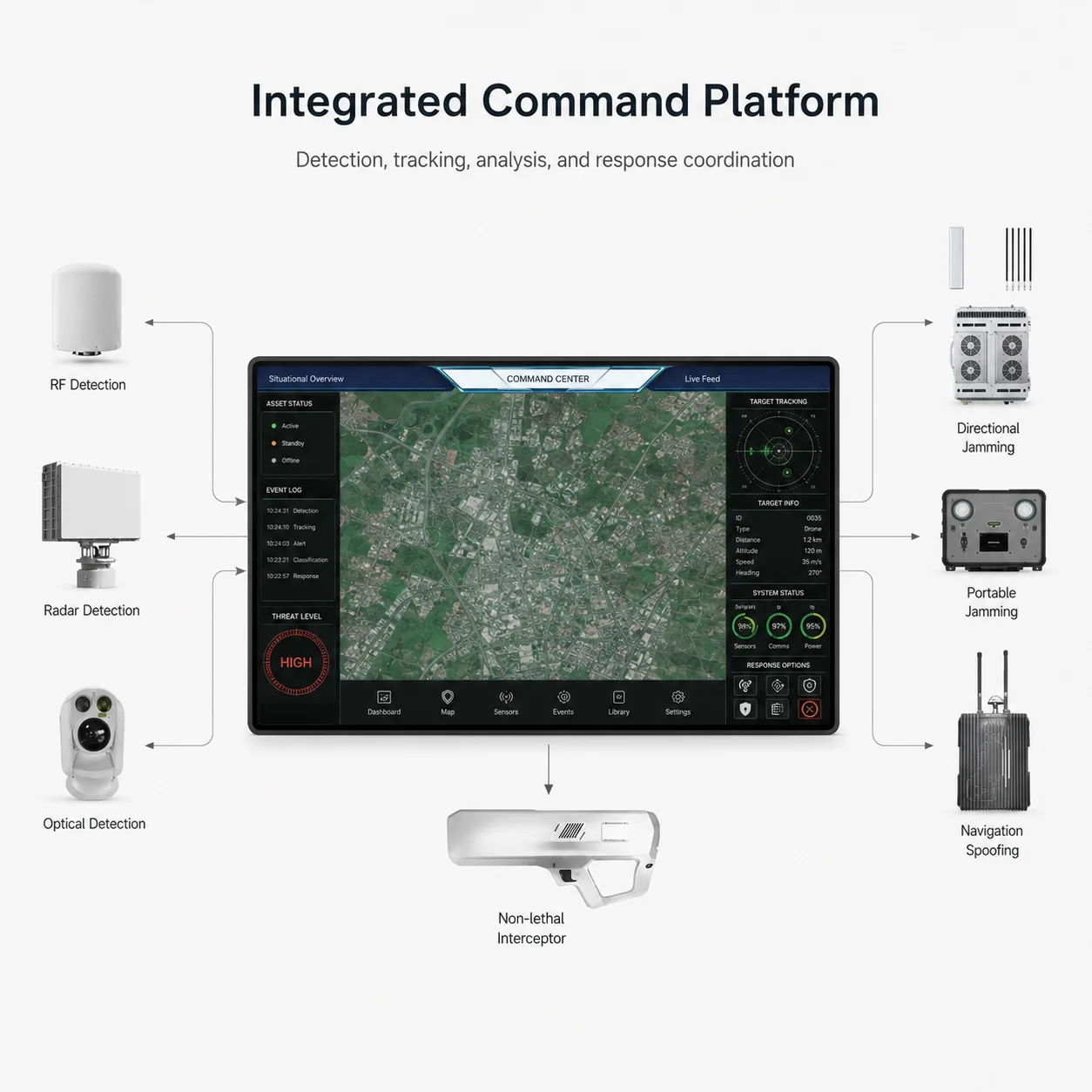
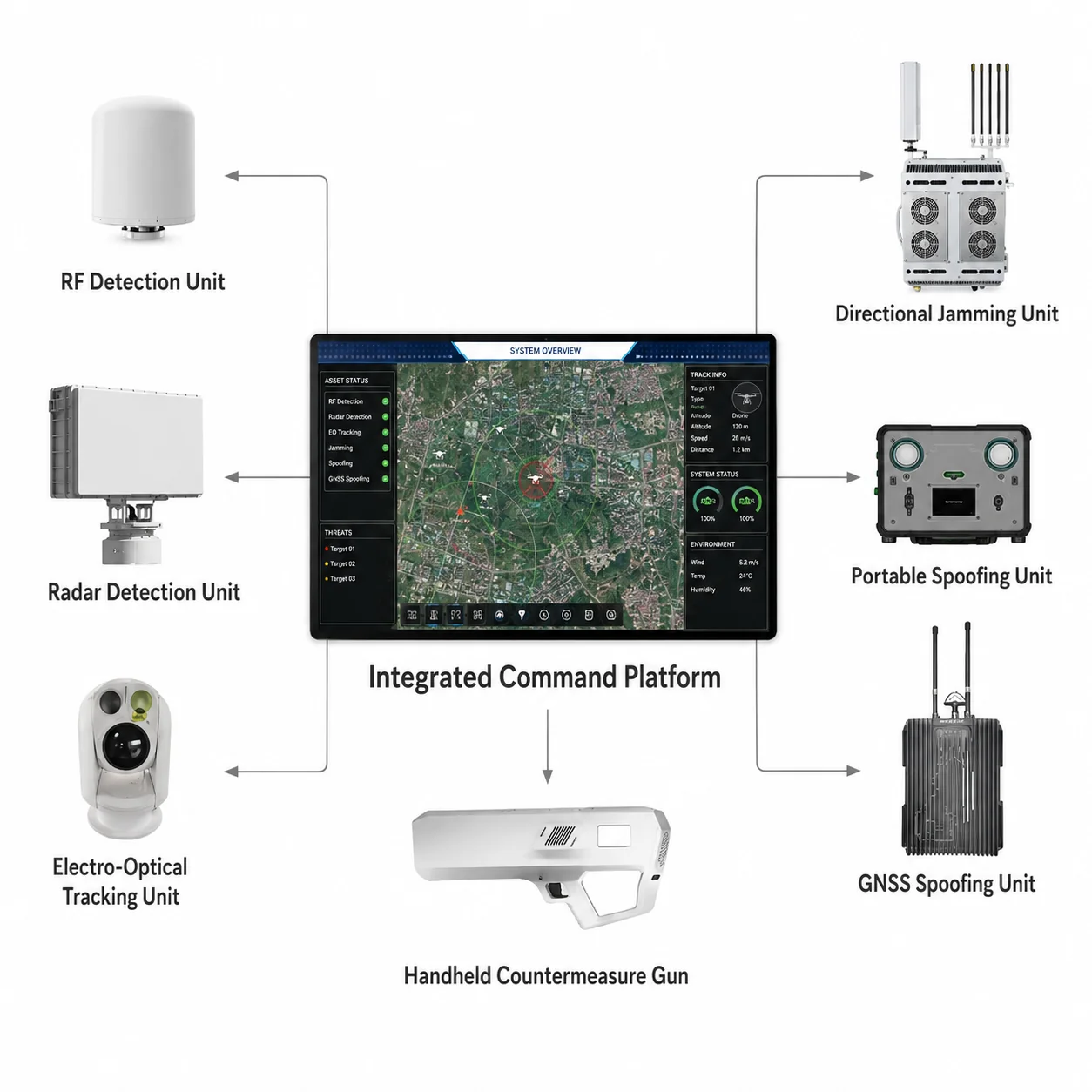
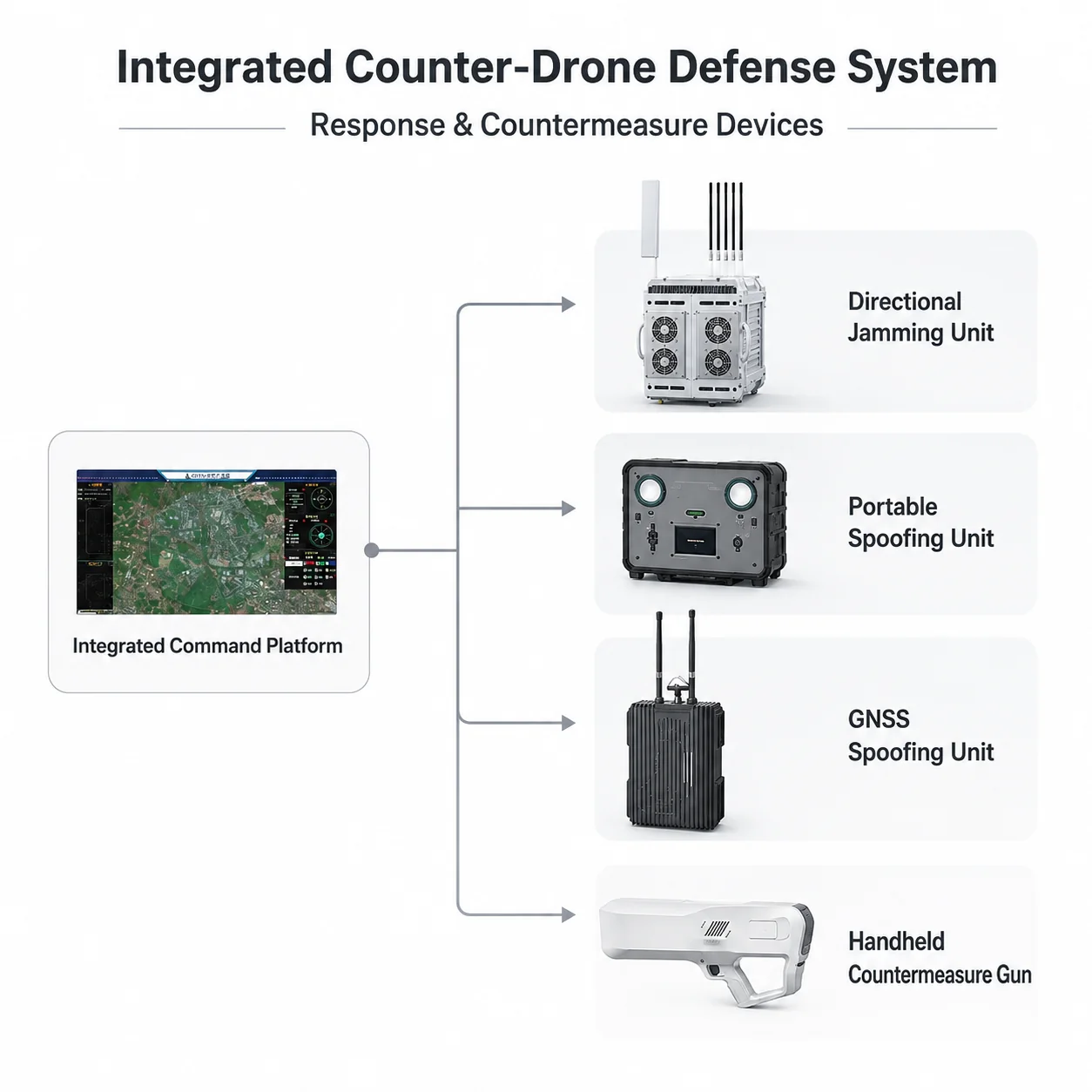
The system detects and tracks suspicious drones through RF spectrum monitoring, radar surveillance, and electro-optical confirmation. After a target is detected, the command platform can display key information such as signal type, frequency, bandwidth, direction, distance, coordinates, target status, and threat level. Operators can verify the target through electro-optical video tracking and select an appropriate response method according to the deployment environment, threat level, and local regulations. With modular configuration, multi-device networking, third-party integration, and flexible response options, the system can be adapted to fixed-site protection, mobile patrol, temporary event security, critical infrastructure defense, and regional collaborative low-altitude monitoring. Use, import, export, deployment, and operation must comply with applicable radio-frequency, aviation, public safety, export-control, and local regulatory requirements.
Explore related products in the Counter-Drone Systems range to compare deployment form factors, response methods, and system integration options for similar project requirements.
Counter-Drone SystemsThe BJ012 is a backpack-mounted counter-UAS ja...
 Counter-Drone Systems
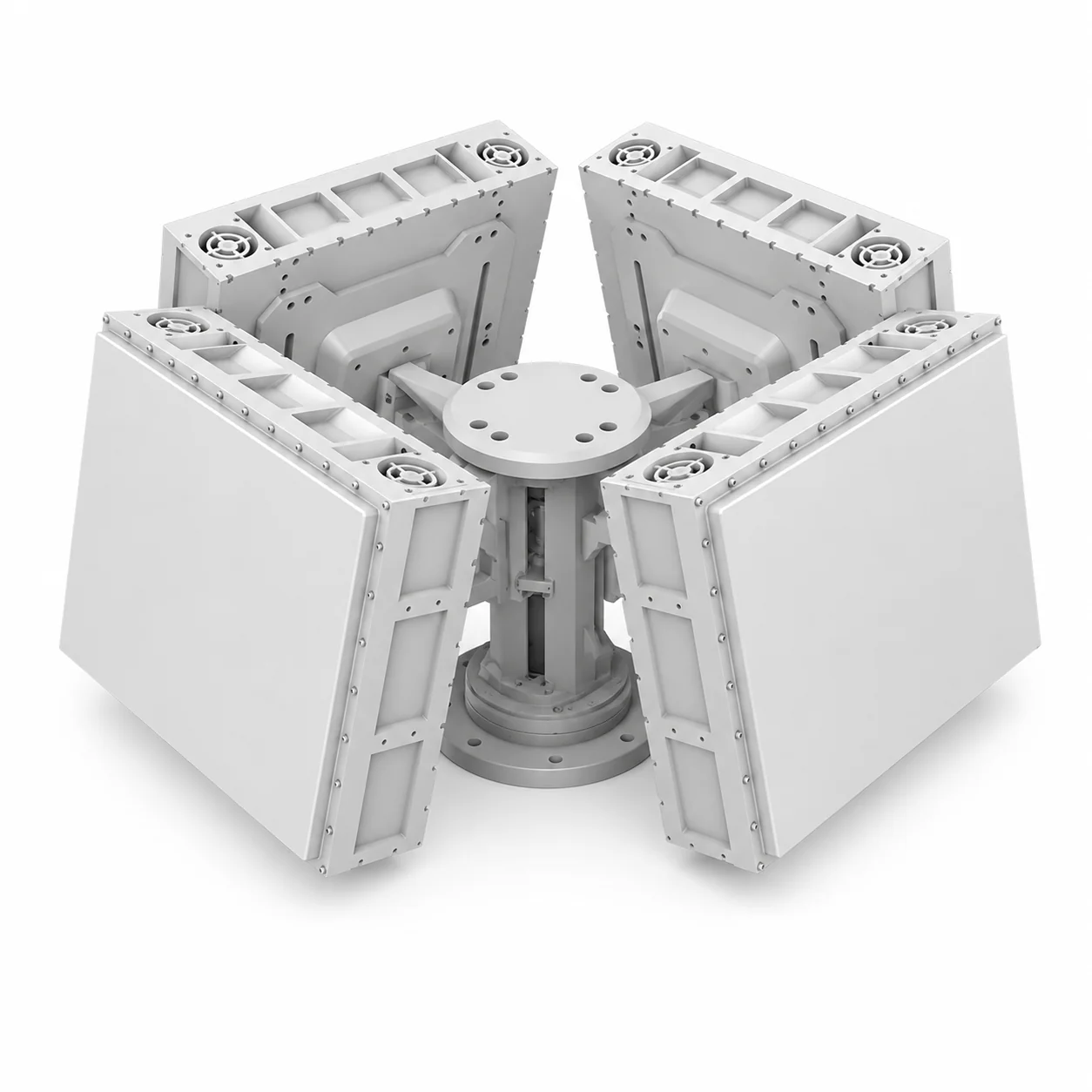
The PA450 Four-Side Phased Array Radar is desi...
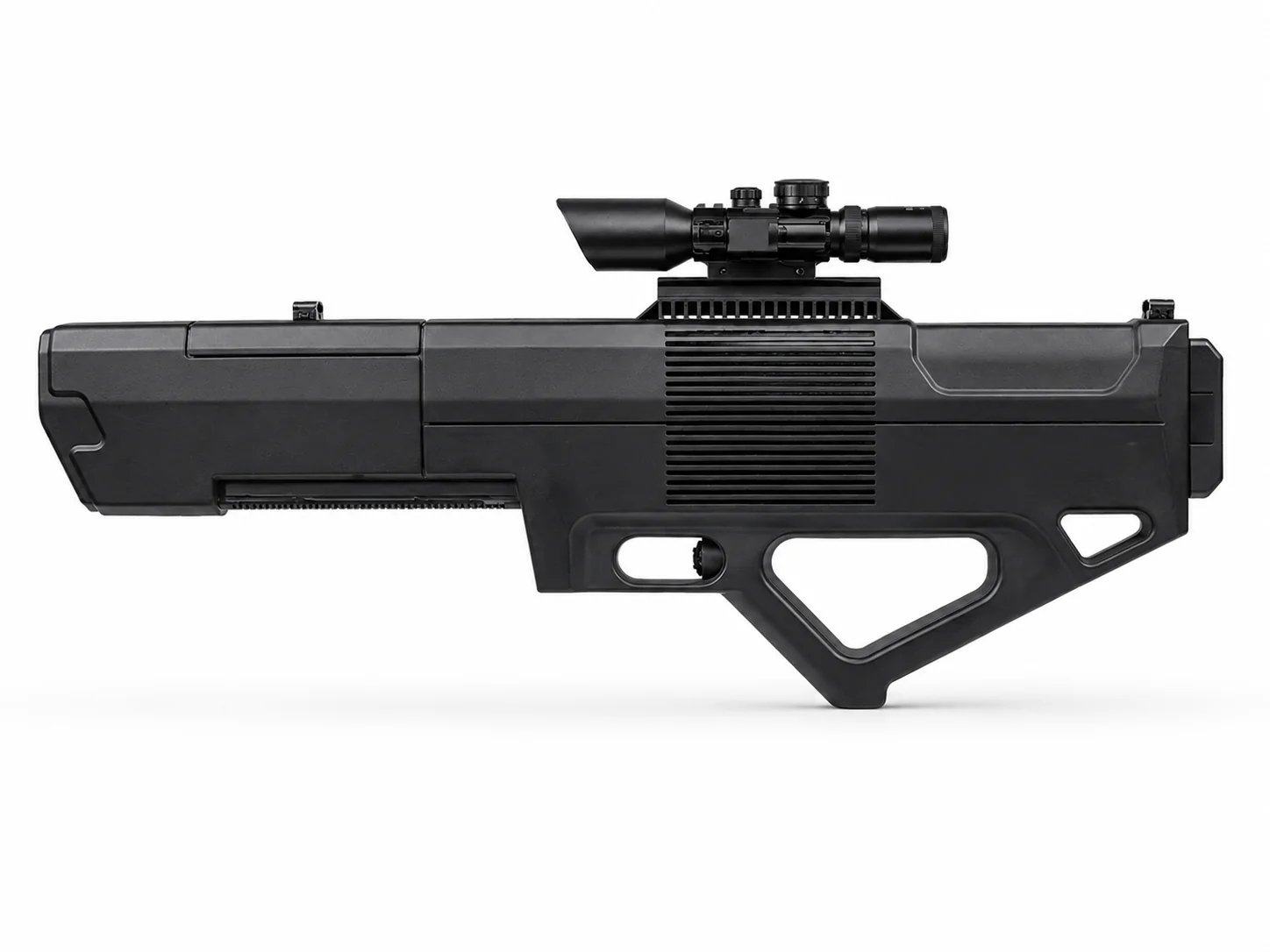 Counter-Drone Systems
The GJ008 is an eight-channel handheld counter...
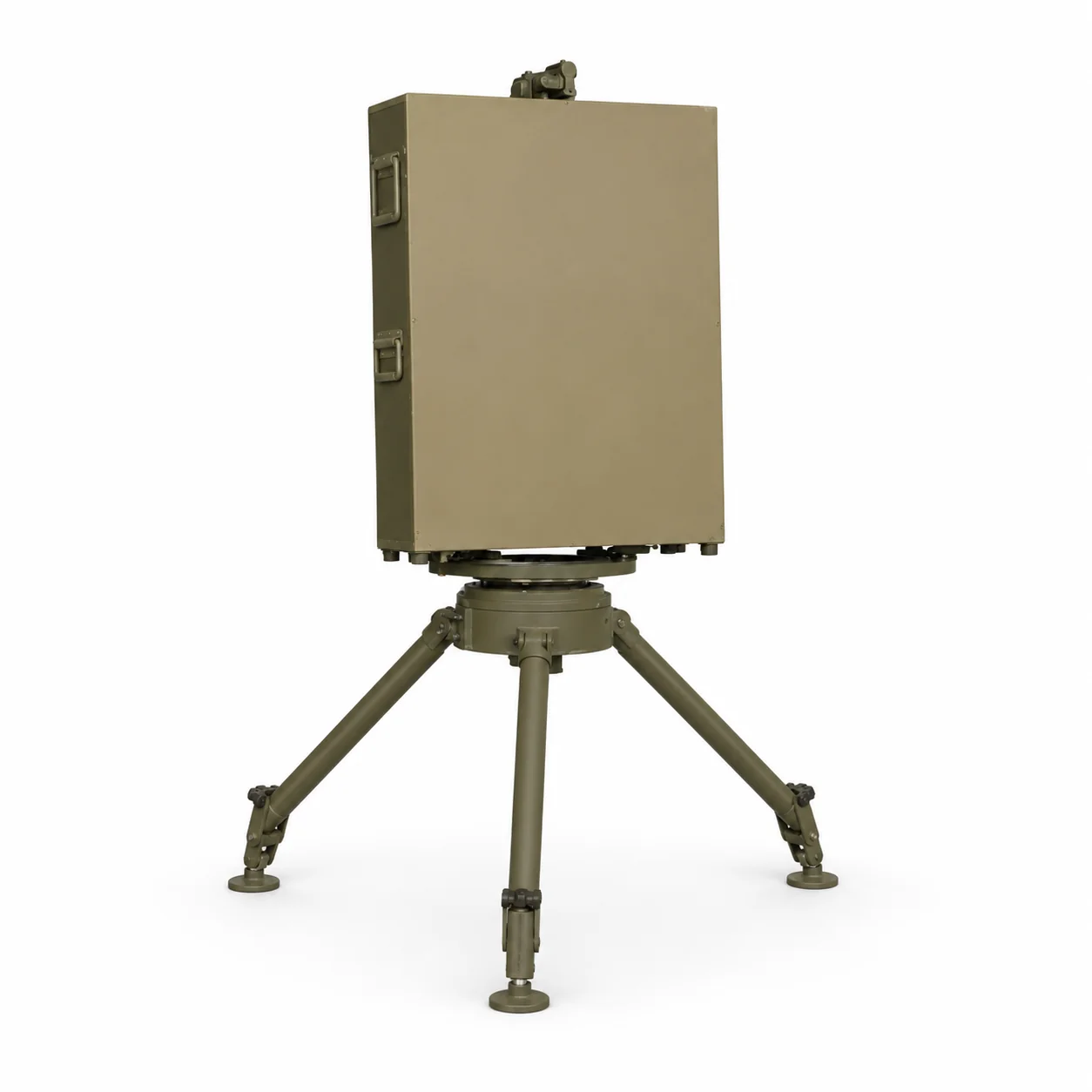 Counter-Drone Systems
The LM065 Multi-Function Radar is designed for...
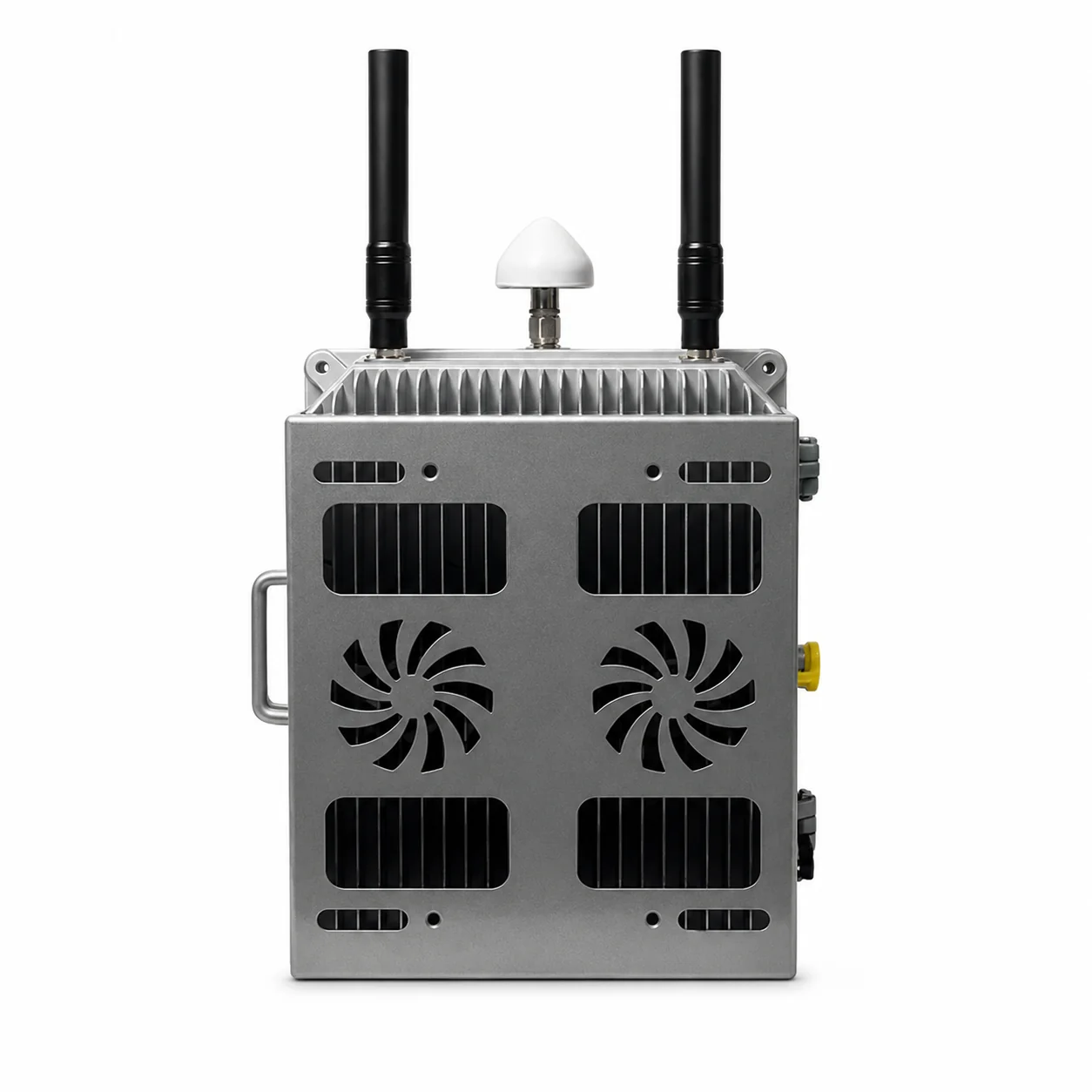 Counter-Drone Systems
The SJ113 is a highly integrated portable GNSS...
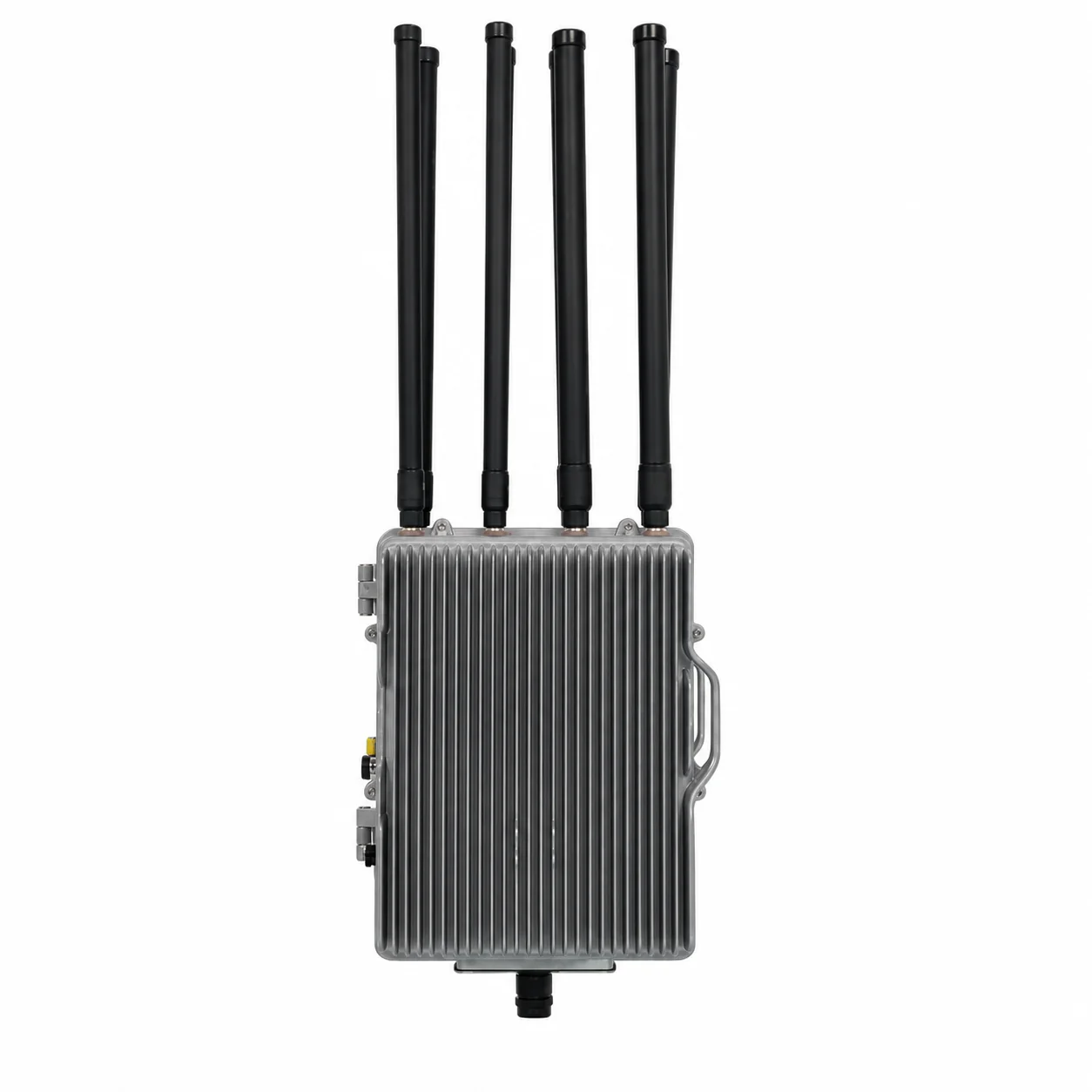 Counter-Drone Systems
The JM1000 is a fixed chassis-type counter-UAS...
 Counter-Drone Systems
The SJ006 Shield-Type Jammer is designed for a...
 Counter-Drone Systems
The BJ008 is a portable counter-UAV backpack j...
Browse adjacent product categories to find complementary platforms, alternative configurations, and broader solution paths connected to this product line.
Counter-Drone Systems
Counter-drone systems for airports, critical infrastructure, industrial facilities, and public security projects, covering detection, tracking, identification, and authorized response workflows.
Defense & Tactical UAVs
Mission-ready tactical UAV platforms for reconnaissance, surveillance, border patrol, and specialized payload operations in complex environments.
Agriculture UAV Drones
Agriculture UAV drones for spraying, spreading, crop protection, and precision farm operations across commercial field, orchard, and plantation environments.
Firefighting Drones
Firefighting drones for thermal monitoring, hotspot detection, scene visibility, and emergency-response support across wildfire, urban, and industrial fire operations.
FPV Drones
FPV drones for training, testing, custom integration, and configurable first-person flight projects with low-latency control and flexible setup options.
The Integrated Counter-Drone Defense System is designed for authorized low-altitude airspace protection. It helps detect, identify, track, assess, and respond to unauthorized drone activity around critical infrastructure, airports, ports, power facilities, petrochemical sites, transportation hubs, public safety areas, and major event venues.
The system can be configured with RF detection units, radar detection units, electro-optical tracking units, an integrated command platform, directional jamming units, GNSS spoofing units, portable spoofing devices, handheld countermeasure guns, and vehicle-mounted counter-UAS systems. The final configuration depends on the protected area, threat level, deployment environment, and local regulations.
The system uses multi-sensor detection methods, including RF spectrum detection, radar surveillance, electro-optical tracking, and Remote ID or Drone ID parsing where applicable. These modules can help identify drone signals, direction, distance, coordinates, flight path, target status, and other relevant target information, with operator-location analysis available where supported by the deployed detection configuration.
Yes. The integrated command platform can connect detection devices and response equipment into one coordinated workflow. After a suspicious drone is detected, the platform can display target information, support video confirmation, assess the threat level, and assist operators in selecting the appropriate response method according to authorization rules, deployment settings, and local regulations.
Yes. The system uses a modular design and can be customized for fixed-site protection, mobile patrol, temporary event security, power facilities, petrochemical plants, airports, ports, industrial parks, and regional collaborative defense projects. Customers can choose different combinations of detection, tracking, command, jamming, spoofing, and portable response modules according to project requirements.
Yes. The command platform can support multi-device networking and third-party device integration depending on the project interface requirements. It can help unify target display, device status, threat alerts, event recording, system linkage, and airspace situation management across different equipment types.
We currently support FOB and CIF terms only. We do not support DDP, DAP, EXW, or door-to-door delivery. Customers are responsible for customs clearance, import permits, taxes, duties, and regulatory compliance in their own country or region. Please confirm all applicable import, radio-frequency, radar, aviation, counter-UAS, and local regulatory requirements before placing an order.