Counter-drone radar system securing an industrial facility perimeter
Products/Counter-Drone Systems

Counter-Drone Systems for Detection, Tracking, and Response

Project-oriented counter-UAS solutions covering RF detection, radar, EO tracking, portable jammers, GNSS spoofing, fixed-site systems, and integrated command workflows.

Counter-Drone Systems Overview

  • Mission focus: detect, track, identify, assess, and support authorized response to unauthorized drones around protected sites and low-altitude security zones.
  • System scope: RF detection, radar, EO tracking, jamming, GNSS spoofing, portable countermeasure devices, and integrated command workflows for project-based deployment.
  • Buyer priorities: site type, coverage range, target drone profile, deployment model, integration level, response authority, and compliance requirements.

Counter-Drone Systems for Detection, Tracking, and Authorized Response

Counter-drone systems are designed for professional low-altitude security projects where unauthorized drone activity can create operational, safety, privacy, or security risk. For B2B buyers, the real challenge is rarely finding a single device. It is defining the right counter-UAS architecture for the site, the threat profile, the operational workflow, and the legal response boundary.

This category brings together portable countermeasure devices, backpack jammers, fixed-site chassis jammers, GNSS spoofing equipment, radar systems, and integrated multi-sensor counter-drone defense platforms. The goal is not simply to stop a drone. It is to build a practical workflow for detection, target confirmation, command coordination, and authorized response in the real operating environment.

What Is a Counter-Drone System?

A counter-drone system is a project-based security architecture used to detect, track, identify, assess, and, where legally permitted, support response to unauthorized drones in protected airspace. Depending on the site and the authority model, the system may focus on early warning only, or it may include response tools such as jamming, navigation spoofing, portable countermeasure devices, or integrated device linkage through a central command platform.

For professional users, the most important distinction is that counter-UAS capability is usually built as a workflow rather than as a standalone product. Buyers should think in terms of detection layer, confirmation layer, command layer, and response layer instead of evaluating each device in isolation.

Detection-Only vs Detection-and-Response Architecture

Not every protected site requires the same system depth. Some customers need a detection-only architecture for low-altitude awareness, target tracking, event logging, and security-team escalation. This can be suitable when the main objective is visibility, threat assessment, and incident management rather than active intervention.

Other projects require a broader detection-and-response design. In these cases, the system may combine RF detection, radar, electro-optical confirmation, command software, and authorized response devices to create a more complete low-altitude defense workflow. The best design depends on site risk, response authority, and whether the customer needs only alerting or a more complete counter-drone capability.

Core Technology Stack in a Counter-UAS Project

RF Detection

RF detection is useful when buyers want to identify drone-related signal activity, communication behavior, or remote-control patterns. It can improve early warning and help classify some threat behavior depending on the signal environment and target profile.

Radar Surveillance

Radar helps discover and track physical airborne targets in protected airspace. For customers needing broader-area monitoring or non-cooperative target tracking, radar often becomes an important part of the system. Platforms such as LM065 Multi-Function Radar and PA450 Four-Side Phased Array Radar are relevant when radar-based target discovery and tracking are part of the project requirement.

Electro-Optical Confirmation

Electro-optical tracking supports target confirmation, visual verification, and operator decision-making after detection. In practical deployment, EO confirmation often helps reduce uncertainty and supports a clearer response workflow for the security team.

Response Devices

Where legally approved, response architecture may include portable jammers, backpack systems, fixed-site jammers, and navigation spoofing equipment. Products such as GJ008, BJ008, BJ012, SJ006, JM1000, and SJ113 are relevant when buyers need portable, mobile, fixed-site, or spoofing-capable response tools for authorized projects.

Portable, Fixed-Site, and Integrated Deployment Models

Portable Counter-Drone Devices

Portable systems are usually more suitable for patrol teams, temporary security tasks, mobile response, or short-cycle protection scenarios where operators need to move quickly between locations. Handheld, shield-type, and backpack devices fit this model better than fixed installations.

Fixed-Site Counter-Drone Protection

Fixed-site projects are better suited for facilities that need stable, repeatable, and continuous low-altitude protection. In these cases, chassis-mounted or permanent-response equipment may be combined with radar, RF detection, and a command platform to support a more structured site-defense workflow.

Integrated Multi-Sensor Defense Systems

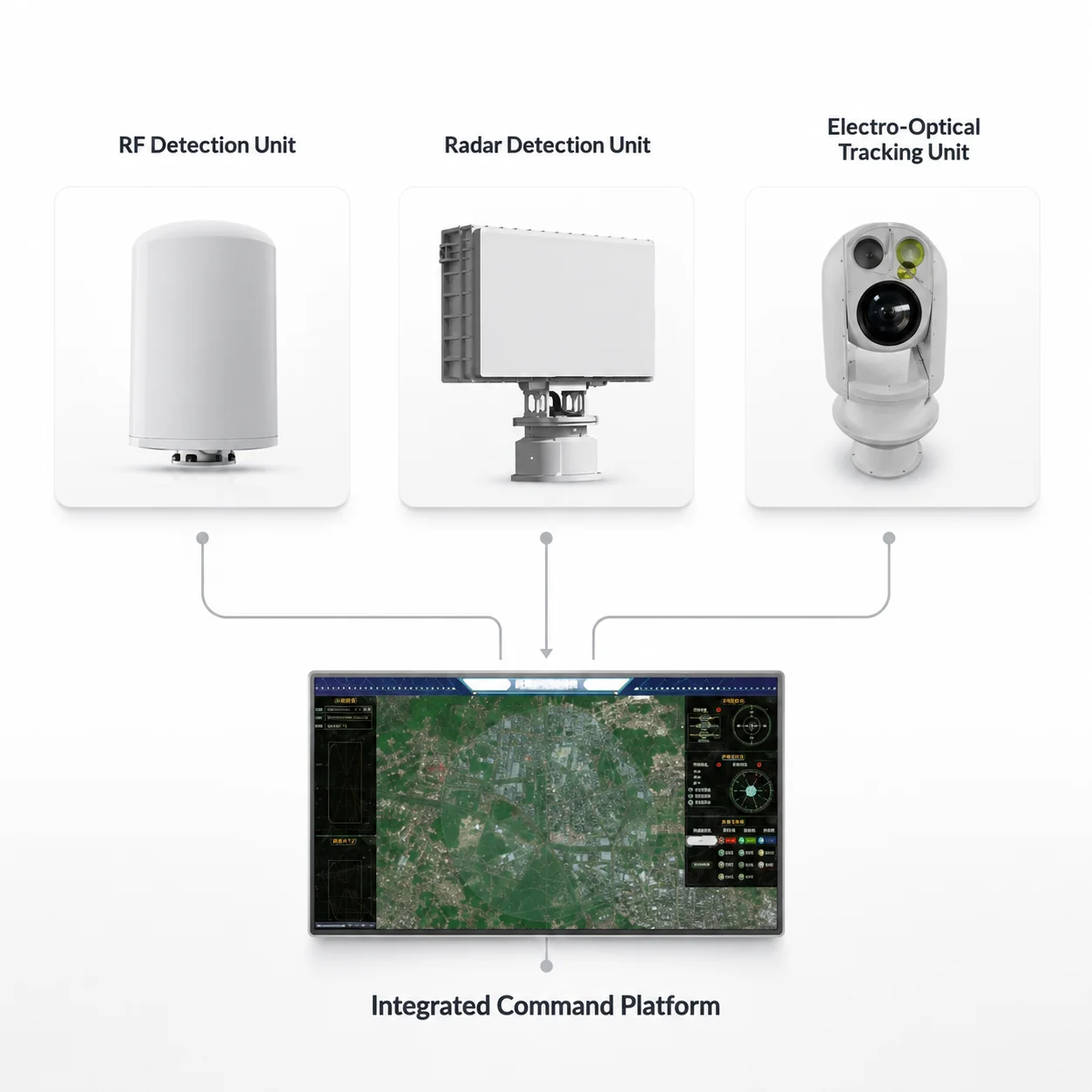
Integrated architecture is usually the right choice when the site requires device linkage, centralized target display, sensor fusion, operator workflow, and project-level system management. Buyers evaluating full-site protection often start from an Integrated Counter-Drone Defense System approach and then define which sensors and response tools are required for the final configuration.

Typical Protected Sites and Project Scenarios

Counter-drone architecture should match the site type. Airports and transport hubs often prioritize broad-area detection, target continuity, and low-altitude airspace awareness. Industrial facilities and power infrastructure may focus more on perimeter integrity, fixed-site deployment, and continuous coverage. Event venues and temporary security projects may rely more heavily on mobile deployment and faster response positioning.

Border areas, government compounds, ports, petrochemical sites, prisons, substations, and other sensitive environments may each require different combinations of RF, radar, EO, command software, and response tools. This is why good counter-UAS procurement usually begins with site conditions and threat scenarios rather than with a single product specification.

How to Choose the Right Counter-Drone Architecture

Buyers usually make better decisions when they answer a few practical questions first. What size area must be covered? Is the project detection-only or detection-and-response? Does the site need portable deployment, fixed-site coverage, or both? What target types are most concerning? What legal authority exists for mitigation? Does the project require command-platform integration or third-party device linkage?

Once these questions are clear, it becomes easier to define whether the customer needs a portable jammer, a radar-supported detection layer, a GNSS spoofing capability, a fixed-site response device, or a multi-sensor integrated platform. In many projects, the correct answer is a coordinated system rather than a single product.

What Buyers Should Prepare Before Quotation

To recommend a suitable counter-UAS solution, buyers should provide the site type, approximate coverage area, deployment environment, whether response is legally permitted, the required deployment model, the target drone concern, integration requirements, quantity, destination country, and any site-specific constraints. This helps define both system scope and device combination more accurately.

For adjacent low-altitude security and surveillance planning, buyers may also review Industrial Security Patrol UAVs and Defense & Tactical UAVs when the broader project includes reconnaissance, patrol coordination, or layered site-security planning.

Commercial Terms and Compliance

Counter-drone projects are highly sensitive to local legal authority, radio-frequency regulation, aviation rules, and approved site-security procedures. Detection, identification, and especially active response should be evaluated under the applicable legal framework before deployment. For international B2B orders, we currently support FOB and CIF trade terms only. Buyers are responsible for local import procedures, clearance, duties, taxes, and compliance obligations in the destination country. For project planning support, please contact us through the contact page.

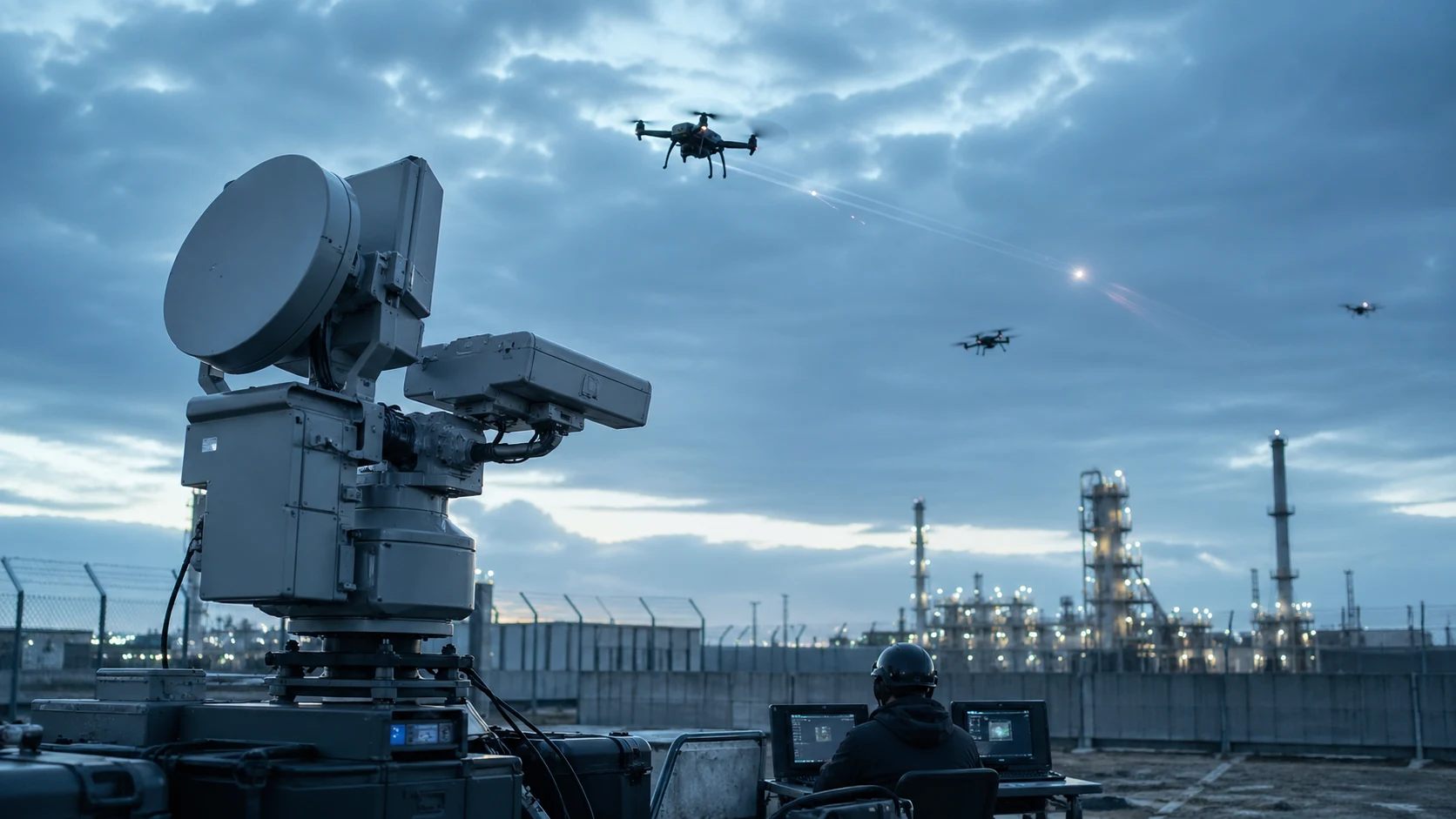
Counter-drone radar system securing an industrial facility perimeter
Key Capabilities
  • 01Layered Counter-UAS Architecture: Covers RF detection, radar surveillance, electro-optical confirmation, command coordination, and compliant response pathways.
  • 02Portable to Fixed-Site Deployment: Supports handheld, backpack, portable, chassis-mounted, and integrated site-defense configurations for different protection scenarios.
  • 03Project-Based System Matching: Helps buyers choose detection-only, detection-and-response, or full multi-sensor counter-drone architectures based on site risk and workflow.
  • 04Integration-Ready Platform Logic: Supports command-platform linkage, multi-device networking, and broader site-security coordination for professional deployments.
  • 05Compliance-Oriented Planning: Suitable for authorized users who must align technology selection with local regulations, operating authority, and approved response procedures.

Related Counter-Drone Systems Products

Integrated Counter-Drone Defense System

Integrated Counter-Drone Defense System

The Integrated Counter-Drone Defense System is designed for authorized low-altitude airspace protection and critical site security. It combines radio-frequency detection, low-altitude surveillance radar, electro-optical tracking, command-and-control software, RF jamming, GNSS spoofing, portable countermeasure devices, and vehicle-mounted systems into a unified counter-UAS solution. The system detects and tracks suspicious drones through RF spectrum monitoring, radar surveillance, and electro-optical confirmation. After a target is detected, the command platform can display key information such as signal type, frequency, bandwidth, direction, distance, coordinates, target status, and threat level. Operators can verify the target through electro-optical video tracking and select an appropriate response method according to the deployment environment, threat level, and local regulations. With modular configuration, multi-device networking, third-party integration, and flexible response options, the system can be adapted to fixed-site protection, mobile patrol, temporary event security, critical infrastructure defense, and regional collaborative low-altitude monitoring. Use, import, export, deployment, and operation must comply with applicable radio-frequency, aviation, public safety, export-control, and local regulatory requirements.

JM1000 Chassis-Type Counter-Drone Jammer

JM1000 Chassis-Type Counter-Drone Jammer

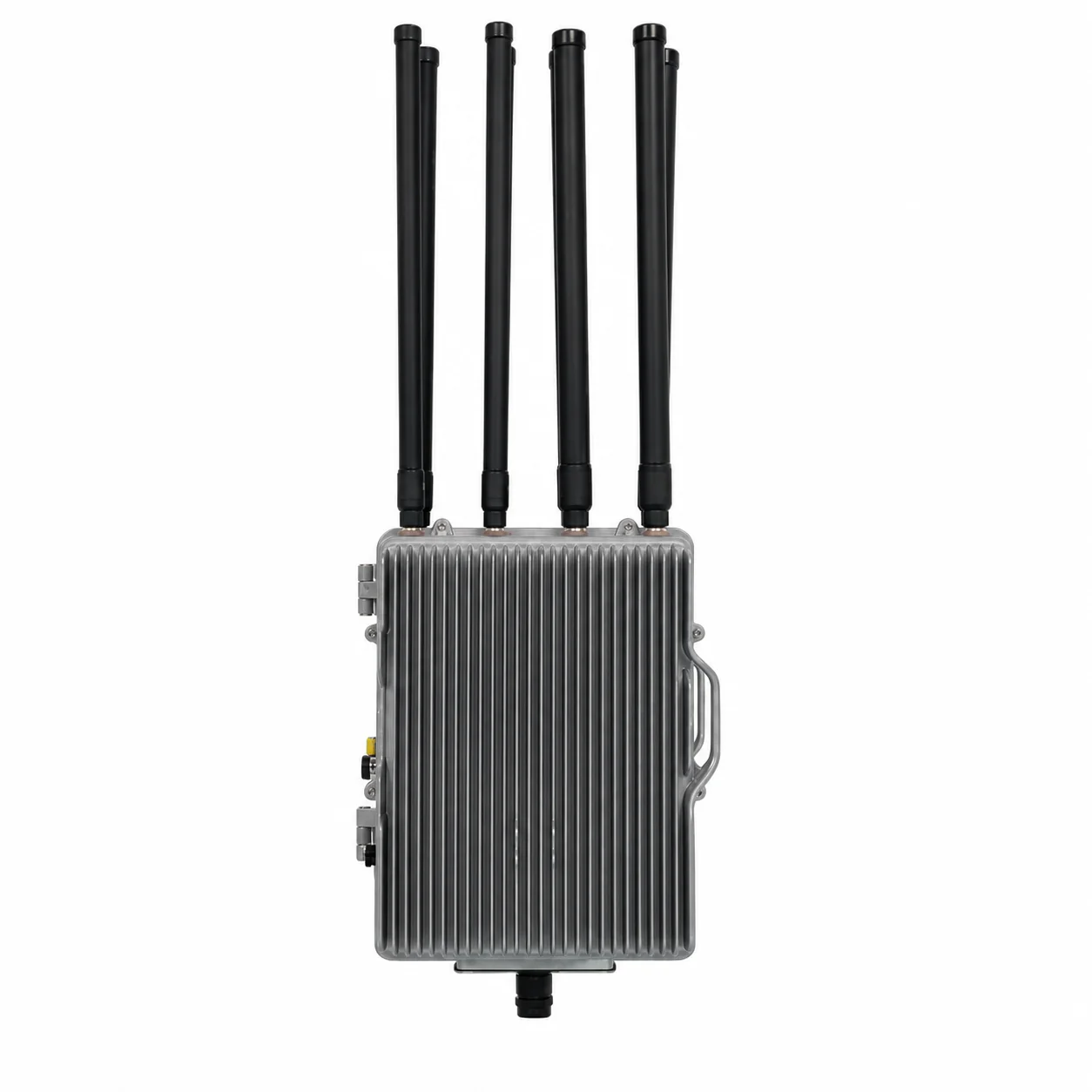
The JM1000 is a fixed chassis-type counter-UAS jammer designed for authorized low-altitude drone security operations. With configurable multi-band coverage, high-power channel output, aluminum chassis protection, and support for unattended deployment, it is suitable for critical infrastructure protection, perimeter security, public safety operations, and harsh field environments. The JM1000 Chassis-Type Counter-Drone Jammer is a fixed multi-band counter-UAS device designed for authorized low-altitude security and site protection applications. Built with a durable aluminum chassis, the system combines electromagnetic jamming capability with physical protection and electromagnetic shielding, making it suitable for complex, harsh, or long-duration operating environments. With configurable frequency bands covering commonly used drone control, image transmission, and navigation links, the JM1000 can be adapted to different project requirements and regional operating conditions. Its 50-100 W single-channel output power and 500-2000 m response range make it suitable for fixed-site protection scenarios where stable, continuous, and coordinated counter-drone coverage is required. The system supports unattended operation and multi-device coordination, allowing it to be integrated into larger perimeter security or low-altitude defense networks. It is commonly used for critical infrastructure protection, industrial facility security, public safety operations, border areas, and other approved security environments.

BJ012 Backpack-Mounted Counter-Drone Jammer

BJ012 Backpack-Mounted Counter-Drone Jammer

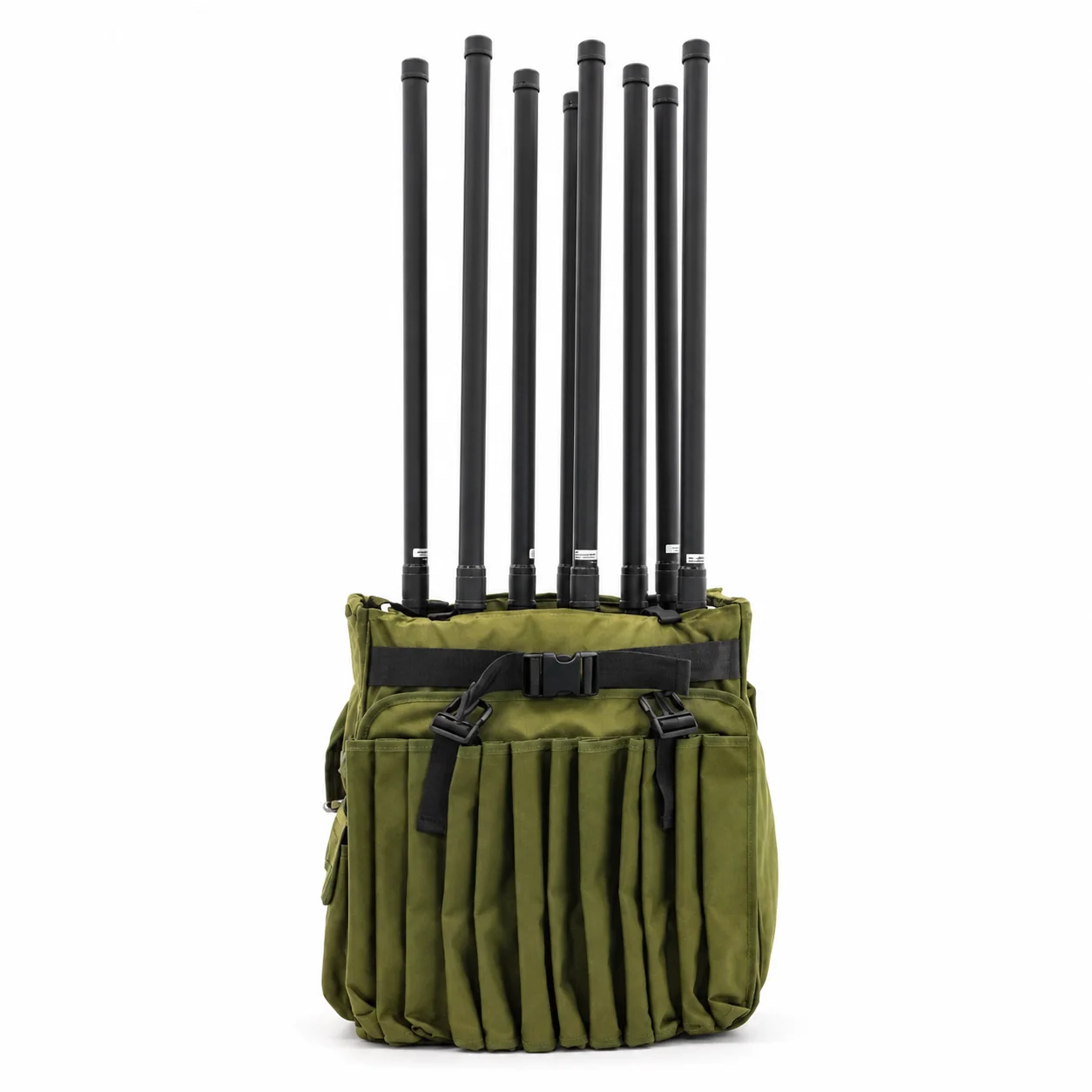
The BJ012 is a backpack-mounted counter-UAS jammer designed for authorized mobile field operations. With configurable multi-band coverage, 360° high-gain omnidirectional antennas, replaceable battery design, and battery level display, it supports flexible low-altitude drone response for public safety, security patrols, temporary site protection, and emergency field deployment. The BJ012 Backpack-Mounted Counter-Drone Jammer is a portable counter-UAS device designed for authorized field operations. Its backpack-style structure allows security personnel to carry the system for extended periods during patrols, emergency response, temporary site protection, and mobile low-altitude security missions. Equipped with a built-in battery, battery level indicator, and high-gain 360° omnidirectional antennas, the BJ012 supports flexible deployment in outdoor and field environments. The system uses wide-band signal coverage to suppress the main communication, image transmission, and positioning frequency bands used by mainstream drones, helping authorized users respond to unauthorized drone activity. With configurable jamming bands, 50-100 W single-channel output power, and a 500-2000 m effective response range, the BJ012 is suitable for public safety operations, border patrols, event security, industrial facility protection, and temporary restricted-area defense. Use, import, export, and operation must comply with applicable radio-frequency, aviation, public safety, and local regulatory requirements.

SJ113 GNSS Spoofer

SJ113 GNSS Spoofer

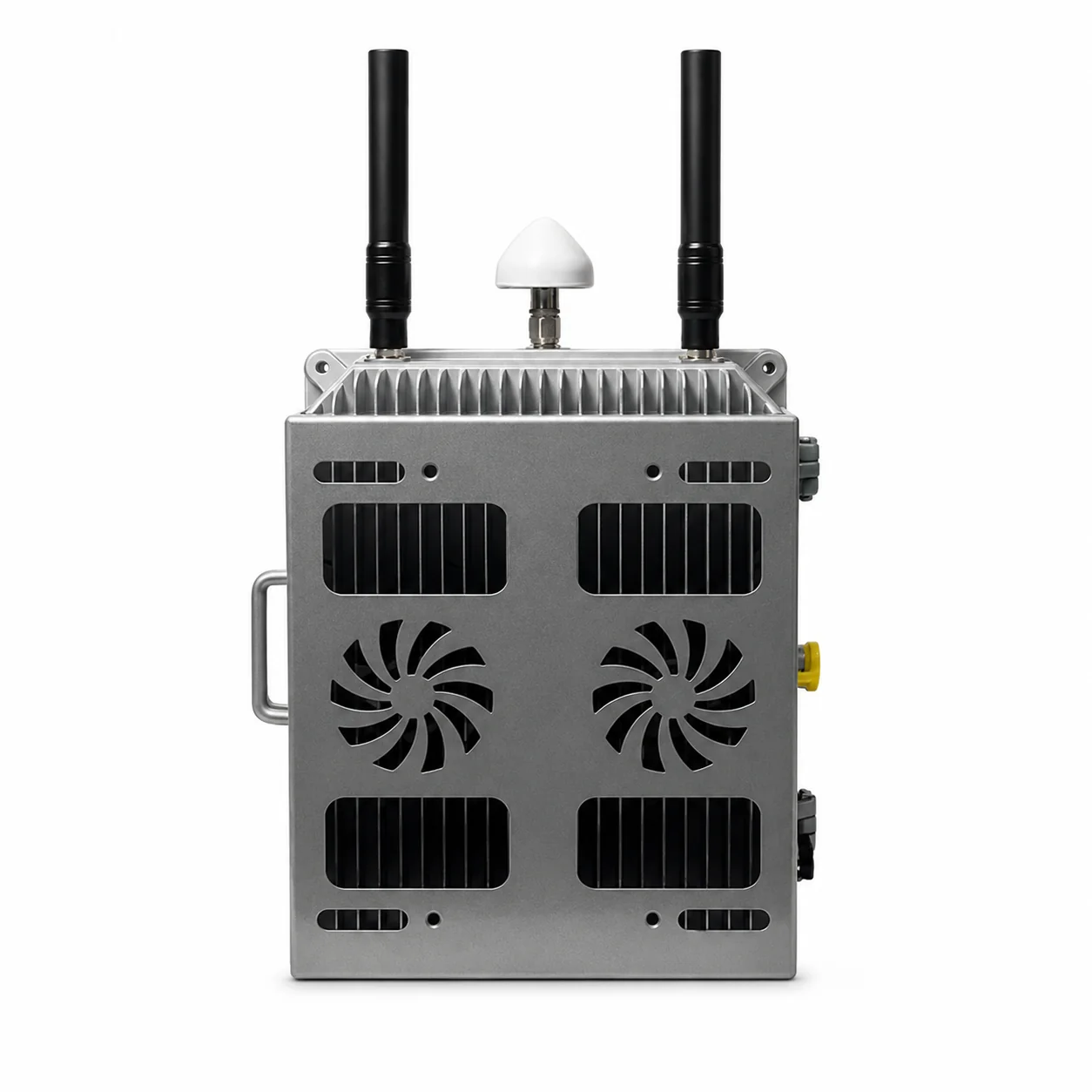
The SJ113 is a highly integrated portable GNSS spoofing system designed for authorized counter-drone operations. It supports satellite navigation signal simulation across major global navigation systems, including BDS, GPS, GLONASS, Galileo, QZSS and IRNSS. With power regulation, high-precision 10 MHz clock synchronization, and support for up to 13 simultaneous frequencies, it helps authorized users guide, divert, restrict, or assist in controlled drone response when used with compatible detection equipment. The SJ113 GNSS Spoofer is a portable counter-drone navigation spoofing device designed for authorized low-altitude security operations. It is intended for drones that rely on satellite navigation and positioning systems, helping authorized users influence drone navigation behavior through simulated satellite navigation signals. The system supports major global navigation satellite systems, including BDS, GPS, GLONASS, Galileo, QZSS and IRNSS. With frequency simulation, power regulation, high-precision 10 MHz clock synchronization, and <1 μs signal synchronization, the SJ113 can support accurate and coordinated spoofing operations in approved counter-UAS scenarios. The SJ113 can support multiple navigation response functions, including diversion, heading guidance, circular motion guidance, no-fly guidance, and assisted fixed-point forced landing when used together with precise drone detection equipment. Its highly integrated and portable structure makes it suitable for professional users who require flexible deployment in mobile or temporary low-altitude security projects.

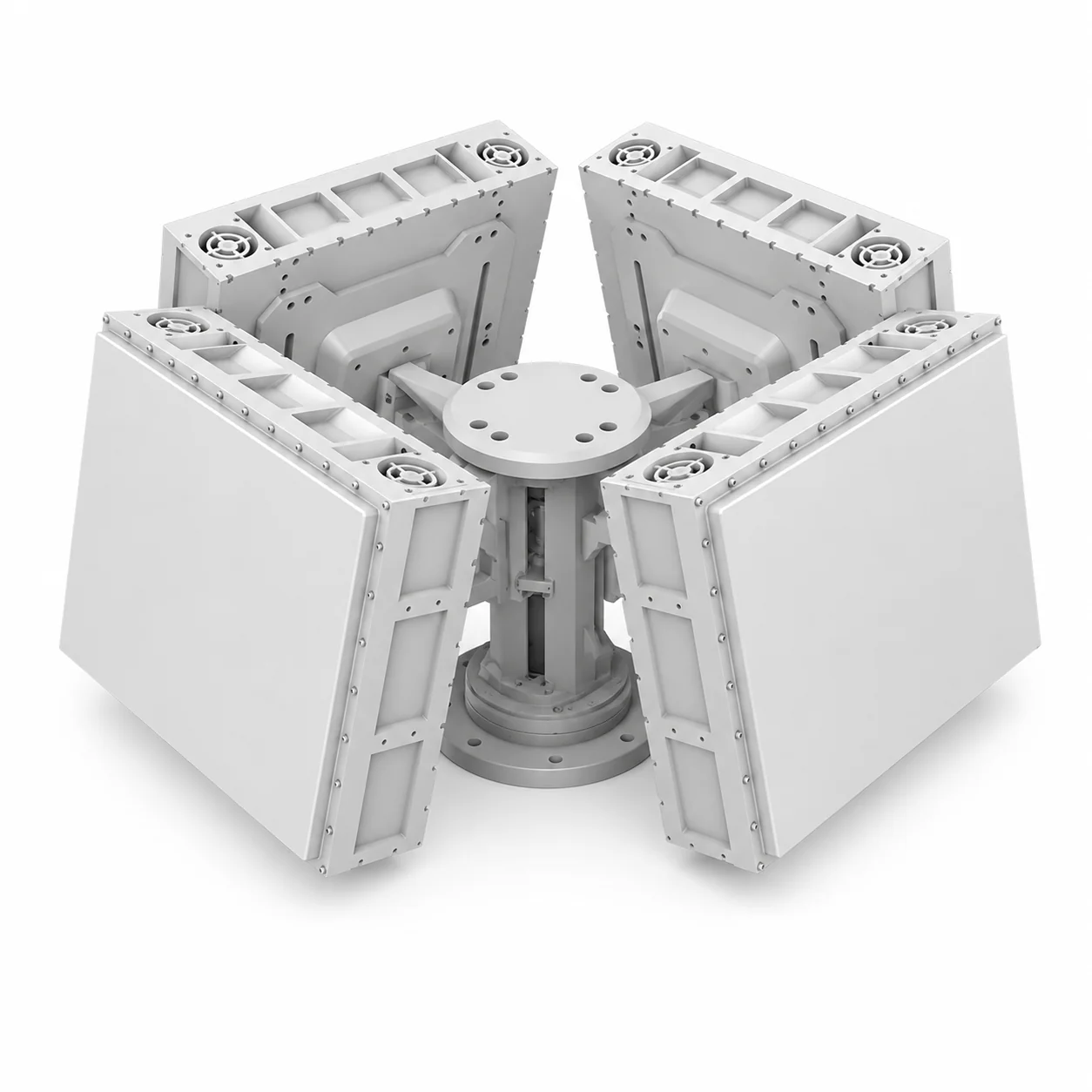
PA450 Four-Side Phased Array Radar

PA450 Four-Side Phased Array Radar

The PA450 Four-Side Phased Array Radar is designed for authorized low-altitude surveillance and target tracking applications. It can support TAS search and tracking of UAVs, birds, and other moving targets, helping users monitor low-altitude airspace in professional security environments. With real-time multi-target tracking and synchronous full-airspace search capability, the PA450 is suitable for projects that require continuous target monitoring, high measurement accuracy, and stable radar performance. Its four-side phased array design supports wide-area observation, making it applicable to important locations where reliable low-altitude detection is required. The PA450 can be used in airport low-altitude security, port surveillance, oil field protection, nuclear power plant security, and other critical site monitoring projects. Its highly integrated and portable structure helps simplify deployment while maintaining stable operation for authorized security and surveillance applications.

Frequently Asked Questions About Counter-Drone Systems

What is a counter-drone system used for?

A counter-drone system is used to detect, track, identify, assess, and, where legally permitted, support response to unauthorized drones around protected sites. It is commonly used for airports, industrial facilities, public safety operations, critical infrastructure, border areas, event venues, and other low-altitude security projects.

What is the difference between RF detection and radar detection in a counter-UAS project?

RF detection focuses on drone communication and signal activity, which can help identify control links, transmission behavior, and some drone-related signal patterns. Radar detection focuses on physical target discovery and tracking in airspace, which is useful when signal conditions are weak, unknown, or non-cooperative. Many professional projects combine both because RF and radar solve different parts of the detection problem.

How do I choose between a portable jammer, a fixed-site jammer, and an integrated counter-drone system?

Portable jammers are more suitable for mobile teams, temporary patrol tasks, and short-cycle field deployment. Fixed-site jammers are more suitable for established protection zones that need stable, repeatable coverage. An integrated counter-drone system is more suitable when the project requires multi-sensor detection, centralized command, device linkage, and broader site-defense coordination.

Can a counter-drone project be detection-only without active mitigation?

Yes. Some projects require only detection, tracking, identification, and alerting workflows without active mitigation. This depends on the customer’s site policy, legal authority, operating environment, and rules of engagement. Detection-only architecture is often considered when response authority is limited or when the project first starts with situational awareness and escalation workflow design.

What devices can be included in an integrated counter-UAS deployment?

Depending on the site and project scope, an integrated deployment may include RF detection units, radar systems, electro-optical tracking, command-and-control software, portable jammers, fixed-site jammers, GNSS spoofing devices, vehicle-mounted systems, and supporting communication infrastructure. Final configuration should be based on site size, target profile, response requirements, and compliance constraints.

Which protected sites typically need different counter-drone architectures?

Airports, ports, power facilities, petrochemical sites, industrial parks, prisons, border areas, government compounds, and event venues often have different requirements. Some sites prioritize early warning and wide-area detection, while others prioritize rapid portable response or integrated command workflows. The correct architecture depends on protected-area size, threat exposure, terrain, airspace complexity, and response authorization.

What information should buyers provide before requesting a quotation?

Please provide the protected site type, approximate coverage area, target drone concern, operating environment, whether you need detection-only or detection-and-response, preferred deployment style, integration requirements, quantity, destination country, and any regulatory or authority constraints. This helps define a more accurate system configuration and quotation scope.

What trade terms do you support for international orders?

For international B2B orders, we currently support FOB and CIF trade terms only. FOB means the buyer arranges international freight after the goods are delivered to the agreed port of shipment. CIF means we arrange freight and insurance to the agreed destination port. We do not support DDP, DAP, EXW, or door-to-door delivery terms.

Industrial drone background