Heavy-payload agricultural spraying drone operating over farmland
Products/Agriculture UAV Drones

Agriculture UAV Drones

Agricultural drone platforms for spraying, spreading, and precision farm operations across field crops, orchards, plantations, and commercial service workflows.

Agriculture UAV Drones Overview

  • Mission profile: pesticide spraying, fertilizer application, granular spreading, crop protection, and routine precision agriculture operations.
  • Operating environment: field crops, orchards, plantations, and agricultural terrain where manual spraying or ground machinery is slow, inconsistent, or difficult to deploy.
  • Buyer priorities: tank capacity, spray width, flow rate, terrain adaptability, battery workflow, spare parts planning, and local crop operation requirements.

Agriculture UAV Drones for Spraying, Spreading, and Precision Farm Operations

Agriculture UAV drones are designed for professional farm operations that require more efficient aerial application, better terrain adaptability, and more structured crop treatment workflows than manual spraying or ground machinery can provide. For B2B buyers, the value of an agricultural drone is not only in flight capability. It is in how well the platform fits the crop type, field environment, work intensity, and seasonal operating model.

This category includes agricultural drone platforms for liquid spraying, granular spreading, and routine precision farming tasks. It is relevant for farms, cooperatives, agricultural service providers, distributors, and project buyers who need repeatable and commercially practical agricultural UAV deployment.

What Are Agriculture UAV Drones Used For?

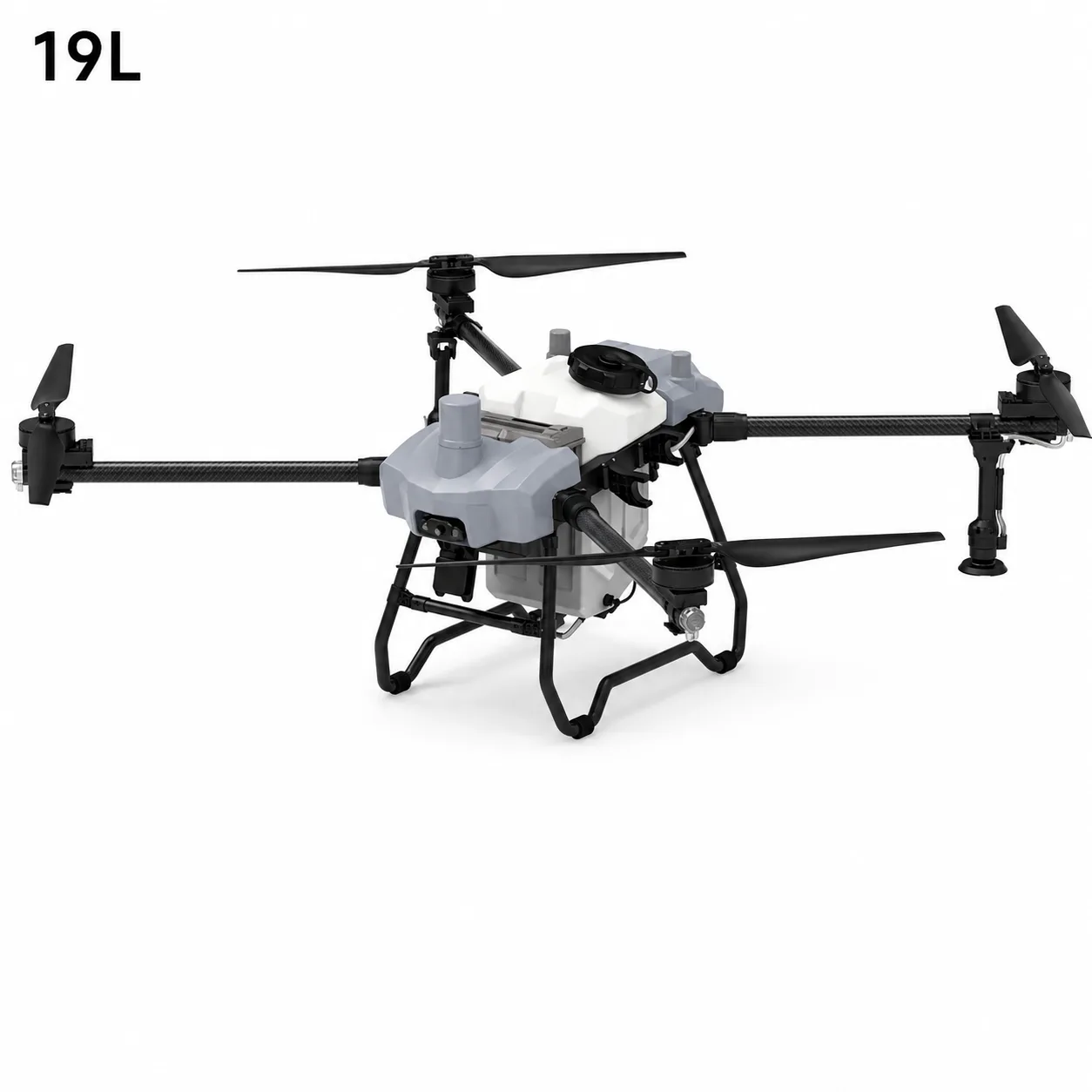
Agriculture UAV drones are commonly used for pesticide spraying, foliar fertilizer application, crop protection, granular spreading, orchard treatment, plantation management, and other routine aerial farm tasks. Compact platforms such as the 19L Agricultural Spraying Drone are often relevant for lighter workloads and more flexible orchard or mixed-field operations. Compared with traditional manual workflows, agricultural UAV platforms can help improve consistency, reduce operator exposure, and cover difficult terrain more efficiently.

They are particularly useful in environments where ground equipment is limited by narrow access, soft soil, steep slopes, orchard spacing, or crop height. In these conditions, a suitable agricultural drone can become a practical tool for routine field operations rather than a one-off demonstration platform.

Spraying vs Spreading vs Precision Agriculture Workflows

Not every agricultural project has the same workflow. Some buyers mainly need liquid spraying for crop protection and fertilizer application. Others need granular spreading for seed, fertilizer, or material distribution. Some projects also combine farm monitoring, route planning, and structured field management into a broader precision agriculture workflow.

For this reason, agricultural drone selection should begin with the real farm task rather than with a single headline parameter. Tank capacity, spray system, spreading module, route planning, and terrain-following setup all affect whether the platform fits the job well.

Field Crops, Orchards, and Plantation Scenarios

Open-field crop operations often prioritize wider coverage, efficient refill cycles, and higher daily workload capability. Orchard and plantation projects usually place more emphasis on terrain adaptability, obstacle awareness, route precision, and the ability to work in narrower or more irregular farm layouts.

This is why the same agricultural UAV model may be suitable for one farm operation and less suitable for another. Crop structure, row spacing, canopy density, terrain change, and application method all influence the final platform recommendation.

How to Choose 19L, 50L, and 100L Class Agricultural Platforms

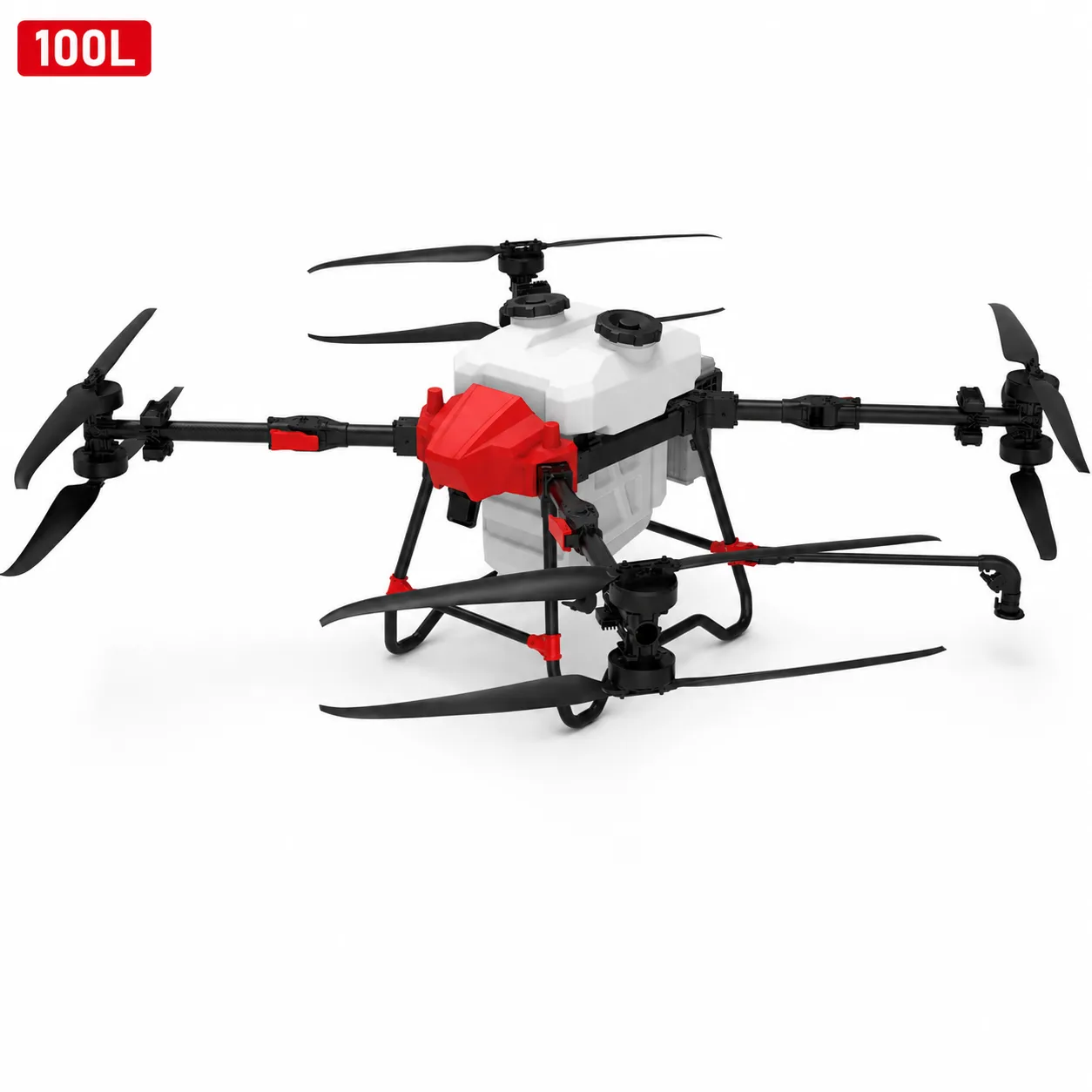
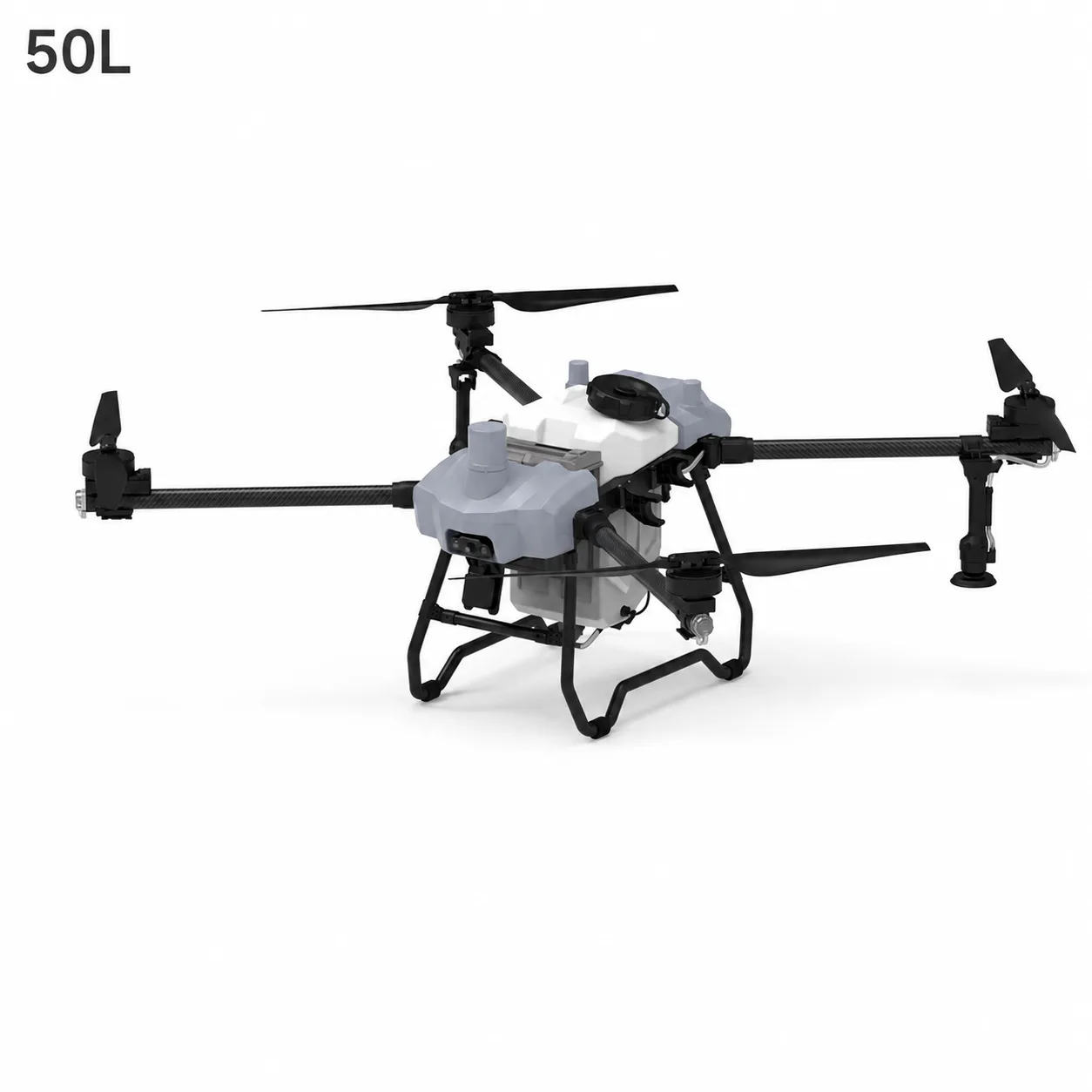
Smaller-capacity agricultural drones are usually more suitable for lighter workloads, orchard environments, compact deployment, and buyers who need a more flexible entry point for commercial spraying. Mid-capacity platforms such as the 50L Agricultural Spraying Drone often provide a practical balance between payload, operating flexibility, and daily efficiency for many agricultural service teams. Larger-capacity models such as the 100L Agricultural Spraying Drone are more suitable for broad-acre field operations where reducing refill frequency and improving throughput are more important.

In practice, buyers should compare more than tank size alone. Spray width, flow rate, battery workflow, terrain adaptation, accessory configuration, and service planning are all part of the decision. A larger tank is not always the better choice if the farm environment requires tighter maneuvering or shorter task cycles.

What Buyers Should Evaluate Before Quotation

For agricultural UAV procurement, buyers usually make better decisions when they confirm the crop type, farm size, terrain condition, target application, expected daily workload, battery and charging workflow, and spare parts expectations before selecting a model. These factors are often more useful than looking only at a maximum tank figure or a single spray-width claim.

Buyers should also think about who will operate the drone, how often it will be used during the season, and whether the project needs distributor support, training, branding, or after-sales planning. This helps match the UAV platform to the actual commercial workflow rather than to a simplified brochure comparison.

Why Agriculture UAVs Matter for Commercial Farm Operations

For many B2B agricultural users, the appeal of UAV deployment is operational consistency. A suitable agricultural drone can help standardize treatment routes, improve application repeatability, and support more efficient work across areas where manual coverage is slow or difficult. This is especially important during peak crop-protection windows when timing has a direct effect on farm performance.

When the platform is chosen correctly, agricultural UAVs can support more structured seasonal planning for spraying, spreading, and routine field service operations. The real value comes from matching platform capacity and farm workflow, not from exaggerated claims.

Commercial Terms and Import Responsibility

For international B2B orders, we currently support FOB and CIF trade terms only. Buyers are responsible for local import procedures, clearance, duties, taxes, and destination-country compliance requirements. For accurate project matching, customers should share crop type, farm condition, quantity, destination country, and configuration requirements before requesting a quotation or reviewing broader precision agriculture solutions through the contact page.
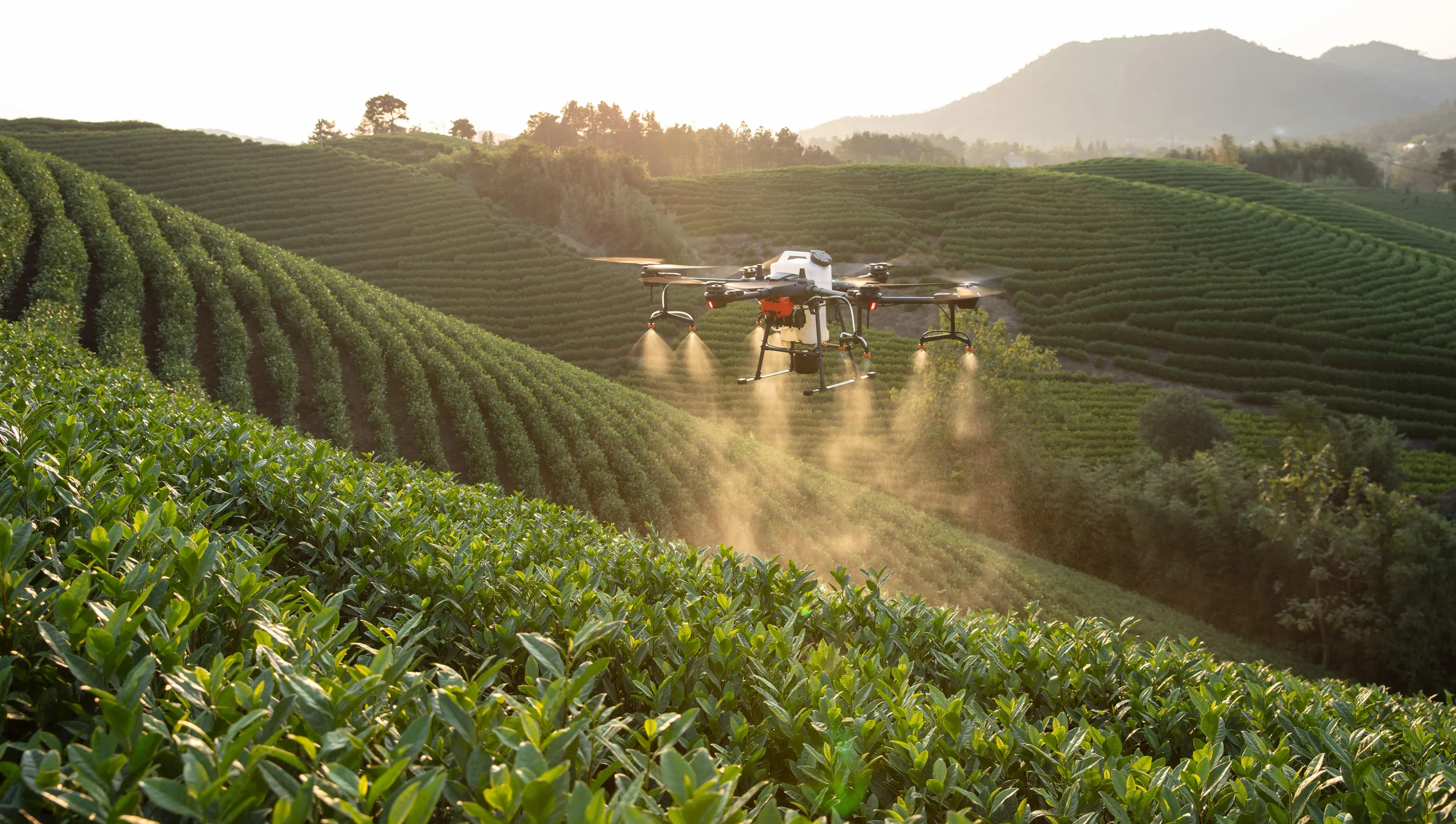
Heavy-payload agricultural spraying drone operating over farmland
Key Capabilities
  • 01Spraying and Spreading Coverage: Supports agricultural UAV workflows for liquid spraying, granular spreading, and routine field treatment across different farm scales.
  • 02Adaptable Farm Deployment: Suitable for open-field crops, orchards, plantations, and uneven agricultural terrain where ground equipment may be less efficient.
  • 03Platform Selection by Capacity: Covers compact, mid-capacity, and higher-capacity agricultural drone options for different acreage, crop, and workload profiles.
  • 04Precision Operation Support: Supports route planning, terrain-following logic, and structured farm operation workflows for more consistent aerial application.
  • 05B2B Project Readiness: Suitable for farms, cooperatives, agricultural service providers, distributors, and buyers planning repeatable seasonal operations.

Related Agriculture UAV Drones Products

100L Agricultural Spraying Drone

100L Agricultural Spraying Drone

The 100L Agricultural Spraying Drone is built for large-scale crop protection, pesticide spraying, fertilizer application, and precision agriculture service projects where throughput and consistency are critical. It is designed for large farms, plantations, cooperatives, agricultural contractors, and distributors that need a high-capacity spraying UAV for intensive daily operations. Compared with smaller spraying platforms, this model helps reduce refill frequency and improve large-area task efficiency. In practical operations, the platform supports more stable route execution, better operation consistency, and stronger adaptability across different field conditions. Its foldable airframe, integrated flight control, and radar configuration options make it suitable for varied crop types, terrain complexity, and operation workflows. For B2B procurement, project configuration can be aligned to local needs, including nozzle setup, radar package, battery and charger planning, spare-parts strategy, training support, and after-sales requirements.

50L Agricultural Spraying Drone

50L Agricultural Spraying Drone

The 50L Agricultural Spraying Drone is built for large-area crop protection, pesticide spraying, fertilizer application, and precision agriculture operations where productivity and consistency are critical. It is designed for farms, cooperatives, agricultural service providers, and crop protection contractors that need to complete more hectares per day with stable spraying quality and lower manual workload. In practical operations, the platform helps teams improve route repeatability, reduce missed or uneven coverage, and maintain better task consistency across different field conditions. This makes it suitable for field crops, orchards, plantations, and commercial agricultural spraying projects. For B2B procurement, configuration can be aligned to local requirements, including nozzle setup, radar package, battery plan, spare-parts strategy, and training support, so the final solution matches operational goals and long-term service needs.

19L Agricultural Spraying Drone

19L Agricultural Spraying Drone

The 19L Agricultural Spraying Drone is designed for crop protection, pesticide spraying, fertilizer spraying, and precision agriculture operations. It gives farm teams a practical aerial spraying platform for daily field work, orchard operations, and seasonal crop-management tasks. The platform is built for farms, agricultural service providers, cooperatives, and distributors that need consistent spray performance across different crop types and field conditions. It is especially useful when manual spraying is labor-intensive, ground machinery access is limited, or operation windows are short during peak farming seasons. In real operations, the key value is not only spray output but also better task consistency and scheduling control. With integrated flight control and optional radar configurations, operators can execute repeatable routes, maintain safer low-altitude operation in complex farmland, and improve coverage quality across orchards, open fields, and uneven terrain. For B2B procurement, the drone supports practical project configuration based on crop type, spraying liquid characteristics, operating scale, and local field environment. Buyers can define nozzle setup, radar package, battery and charger planning, spare-parts strategy, and training scope to match long-term operation efficiency and after-sales support requirements.

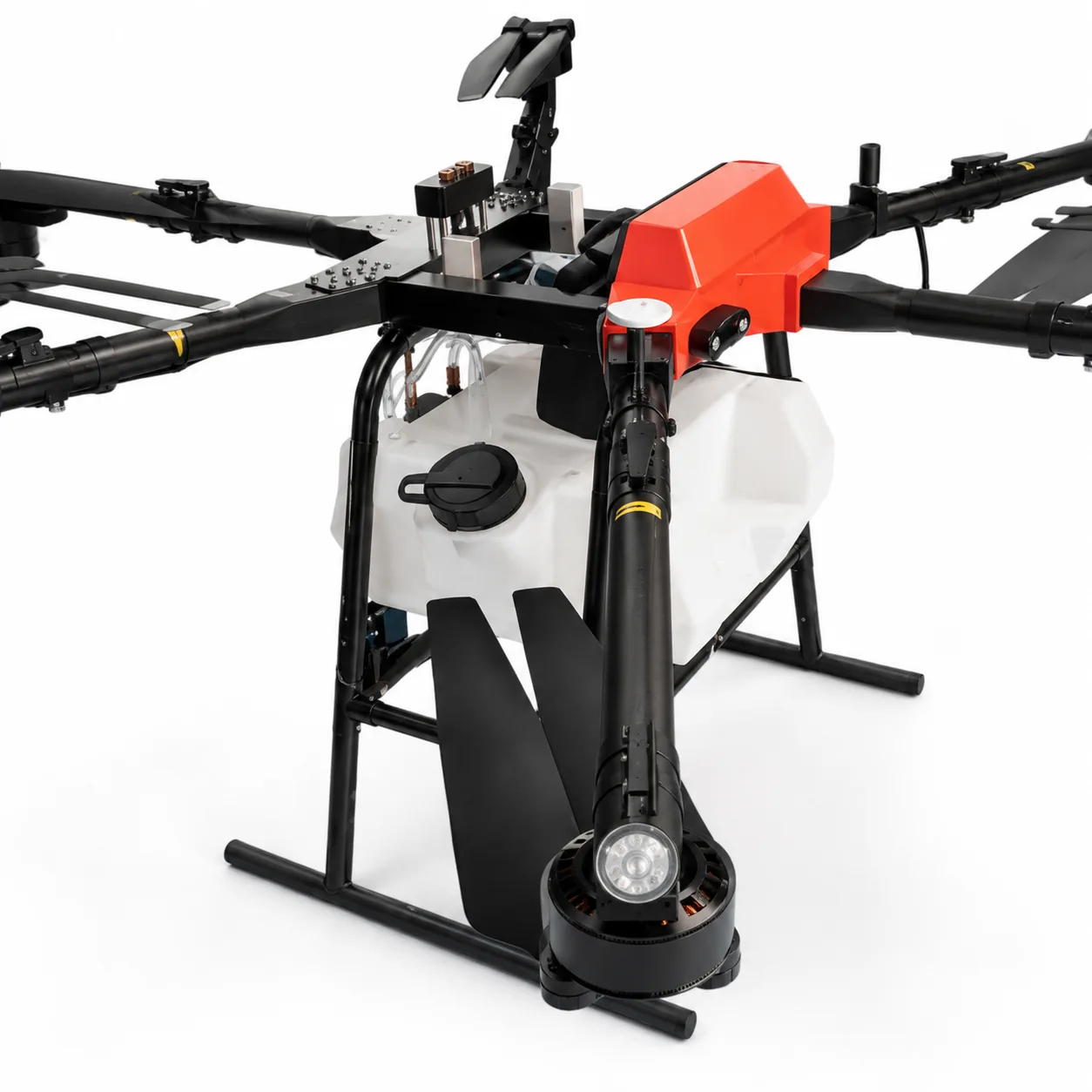
Y6-60

Y6-60

Y6-60 is a heavy-payload agricultural UAV platform designed for crop protection and cleaning workflows. It combines high payload capacity, wide spray coverage, and GPS-RTK positioning to support efficient field operations.

Frequently Asked Questions About Agriculture UAV Drones

What are agriculture UAV drones commonly used for?

Agriculture UAV drones are commonly used for pesticide spraying, fertilizer application, crop protection, granular spreading, orchard treatment, and routine precision agriculture operations. The right platform depends on crop type, field size, terrain, daily workload, and application method.

How do I choose between 19L, 50L, and 100L class agricultural drones?

Smaller-capacity models are usually better for lighter workloads, smaller plots, orchards, and buyers prioritizing portability. Mid-capacity models are more suitable for general commercial farm operations that need a balance of efficiency and flexibility. Larger-capacity platforms are more suitable for large-area field operations where reducing refill frequency and improving daily spraying efficiency are key priorities.

Are these agriculture UAVs suitable for orchards and uneven terrain?

Yes. Many agricultural UAV platforms are suitable for orchards, plantations, slopes, and uneven farmland when configured with the right radar, terrain-following, and route-planning setup. Buyers should still confirm crop height, terrain variation, row spacing, and operating habits before final configuration.

How should spray width and working efficiency be evaluated?

Spray width and working efficiency should be evaluated together with crop type, nozzle system, flow rate, flight speed, dosage requirements, field layout, and weather conditions. Published figures are useful for planning, but practical efficiency always depends on the real farm environment and operating method.

Can the drone support both spraying and spreading workflows?

Depending on the model and configuration, some agriculture UAV platforms can support both liquid spraying and granular spreading workflows. Buyers should confirm the intended material type, application method, expected daily workload, and accessory requirements before quotation.

What information should buyers provide before requesting a quotation?

Please provide crop type, farm size, terrain condition, target application type, expected daily workload, preferred tank capacity, destination country, quantity, battery and charger requirements, spare parts needs, and any distributor or branding requirements. This helps define a more accurate agricultural UAV configuration.

What trade terms do you support for international agricultural UAV orders?

For international B2B orders, we currently support FOB and CIF trade terms only. FOB means the buyer arranges international freight after the goods are delivered to the agreed port of shipment. CIF means we arrange freight and insurance to the agreed destination port. We do not support DDP, DAP, EXW, or door-to-door delivery terms.

Industrial drone background