
How a Drone Improved Oil Palm Plantation Monitoring and Pest Control
An agriculture case study showing how a large oil palm plantation used UAV monitoring and targeted spray support to improve coverage, detect issues earlier, and strengthen pest control planning.
At A Glance
Industry
Agriculture
Use Case
Plantation Monitoring
Deployment Fit
Oil Palm Estates
Operational Focus
Visibility, Speed, Pest Control
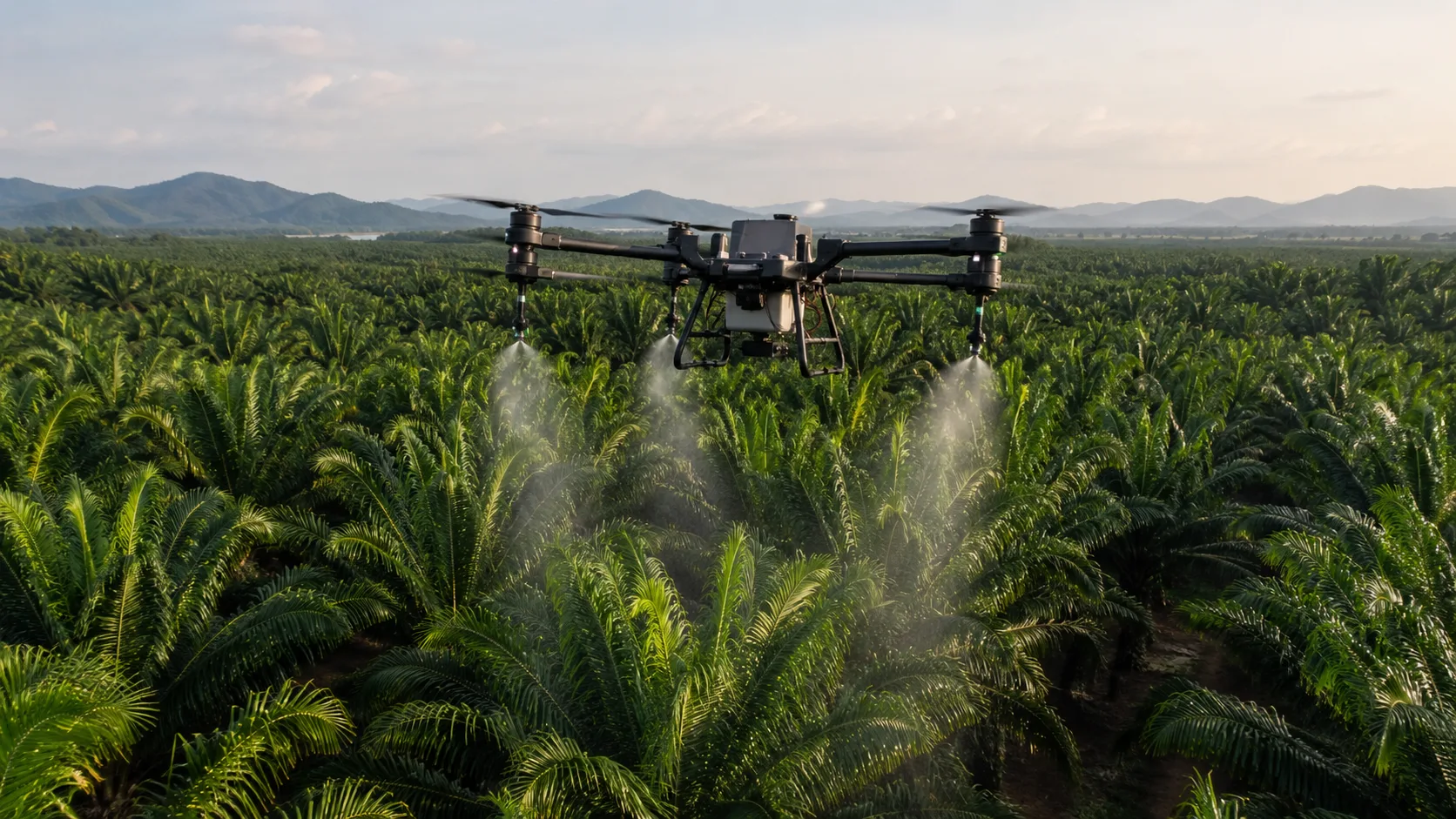
A large oil palm plantation needed a faster and more consistent way to monitor crop conditions across wide, scattered blocks. Manual field inspection remained valuable, but it was too slow to give the estate team a timely view of conditions across the full plantation, especially when pest pressure demanded quicker response. By adding an agricultural UAV into the workflow, the plantation improved monitoring coverage, identified problem zones sooner, and supported more targeted pest control operations.
The UAV was not introduced to replace the agronomy team. Its role was to give the team better visibility, faster field intelligence, and a more efficient way to support treatment planning. With drone-based monitoring and spraying support, the plantation gained a practical operational layer for managing crop health across a large and complex growing environment.
The Operational Challenge
Oil palm plantations are difficult to manage efficiently with ground-only methods because of their size, block layout, and ongoing maintenance needs. In this case, the plantation covered a large area with multiple sections requiring regular monitoring for tree condition, pest activity, access constraints, and uneven field performance. That made complete visibility difficult to maintain at the pace the operation needed.
The estate team was already carrying out routine field checks, but they needed a better way to understand the plantation as a whole. Ground inspections provided useful local insight, yet they were slower to reveal larger patterns across the estate. By the time one area had been reviewed, another block could already be showing signs of crop stress or pest pressure that required attention.
The challenge was not only detection. It was decision speed. The plantation needed a more efficient way to move from field observation to treatment planning before localized issues became broader control problems.
Why a UAV Was a Good Fit
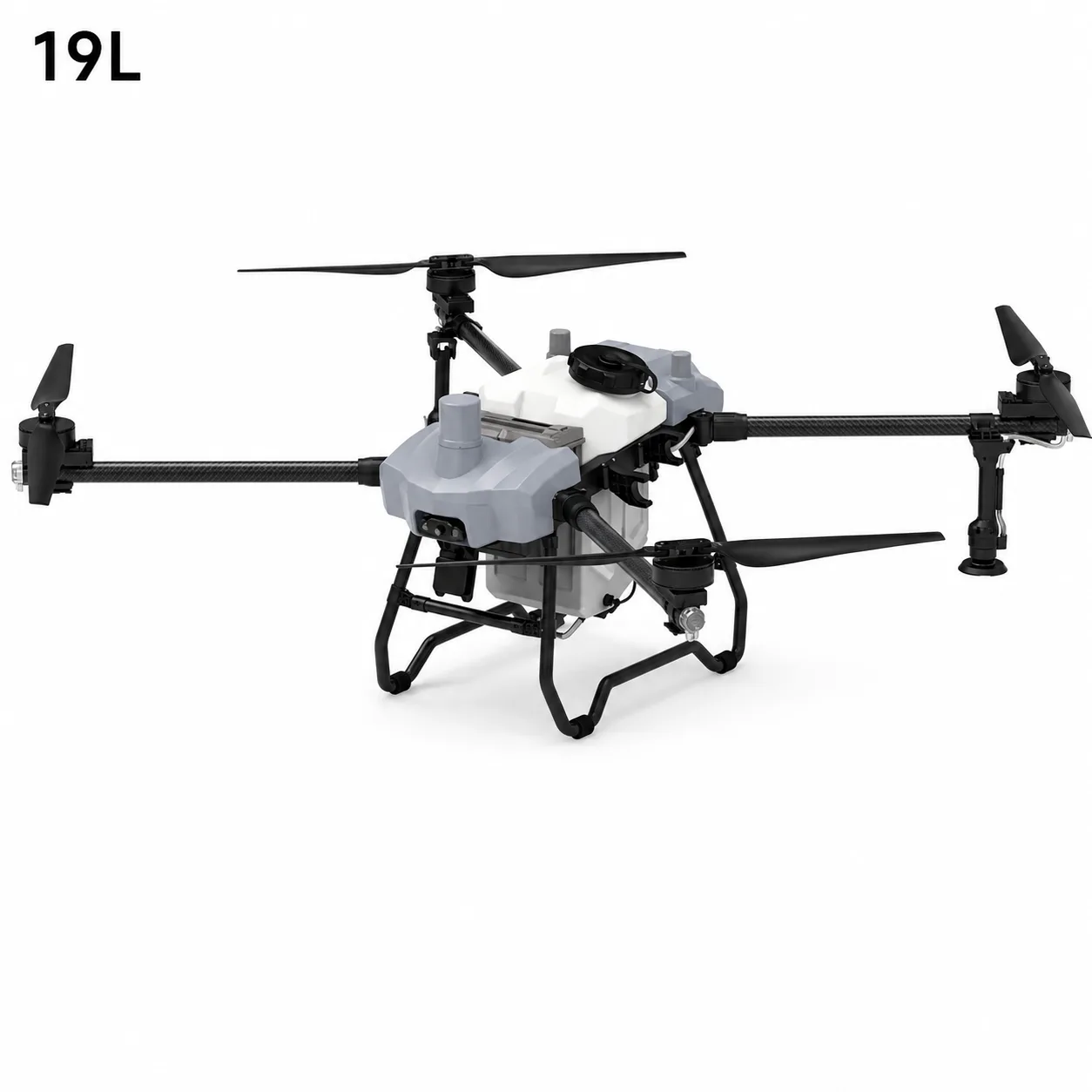
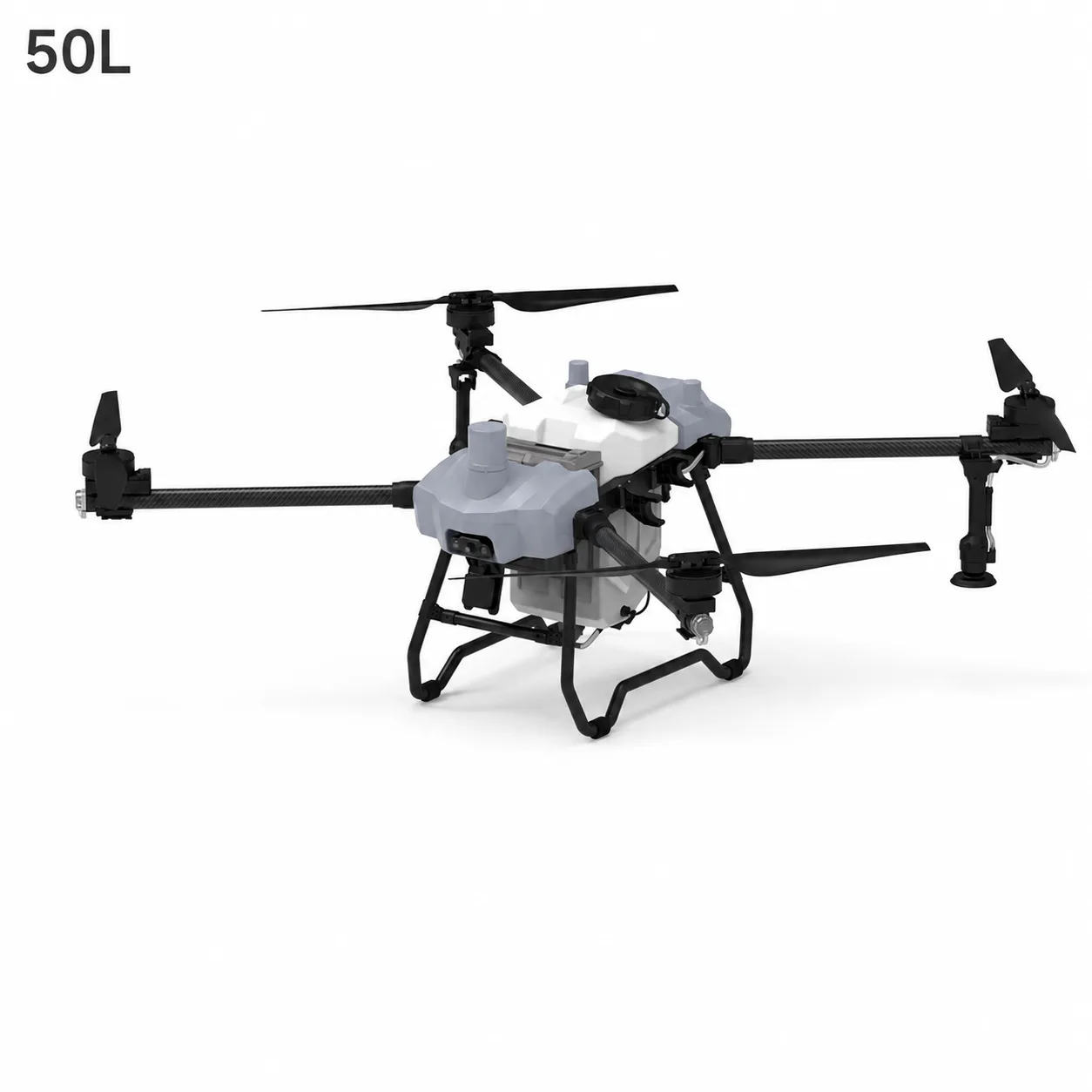
The plantation selected an agricultural UAV because it offered a practical way to combine aerial monitoring with targeted spray support. The drone could cover plantation blocks far faster than a ground team could inspect them on foot, while also generating visual information that helped agronomy staff prioritize which areas needed follow-up first.
The UAV supported five operational needs at once:
- Faster estate-wide monitoring: helping the team review more blocks within a shorter time window.
- Earlier issue detection: improving the plantation's ability to spot crop stress and pest-related anomalies before they spread.
- More targeted pest control: directing treatment toward priority zones instead of relying on less selective response.
- Lower manual workload: reducing the burden on field teams responsible for repetitive inspection activity.
- Stronger treatment planning: giving agronomy staff better information for follow-up decisions and resource allocation.
For plantations building a broader agriculture workflow around drones, we also recommend our precision agriculture guide, our crop monitoring workflow article, and our agricultural plant protection solutions page.
Deployment Workflow
The drone was integrated into the plantation's regular crop management process rather than treated as a separate technology trial. The workflow began with aerial monitoring flights over selected blocks. The UAV collected imagery that allowed the agronomy team to review canopy conditions, look for abnormal performance, and identify areas where pest pressure or crop stress appeared to be developing.
Once priority zones were identified, the plantation used the UAV to support more targeted treatment planning and pest control response. That meant follow-up action could be focused on the areas that needed attention most instead of relying only on slower, less selective ground-led response.
The workflow typically followed five steps:
- Monitoring priority selection: the estate team identified blocks that needed review based on crop cycle, recent field observations, or known risk.
- Aerial monitoring flight: the UAV collected plantation imagery across the selected blocks.
- Agronomy review: the team assessed the imagery and marked zones requiring closer follow-up or pest intervention.
- Targeted treatment support: the UAV helped guide or execute focused spray response where needed.
- Follow-up validation: the team reviewed outcomes and adjusted subsequent monitoring and treatment plans.
This made plantation management more responsive. Instead of waiting for problems to become obvious through slower ground observation alone, the team could act earlier and with greater confidence.
Operational Outcomes
The use of the UAV improved plantation operations in several important ways.
First, it expanded monitoring coverage. The team was able to review larger plantation sections in less time, giving them a broader and more current view of crop conditions across the estate.
Second, it improved response timing. When pest activity or crop stress appeared in a block, the plantation could identify it sooner and prioritize treatment faster than before. That reduced the delay between observation and action.
Third, it made pest control more targeted. Instead of relying only on broad ground-based response, the plantation could direct treatment toward the zones that actually required intervention. That improved operational efficiency and supported more disciplined resource use.
Fourth, it reduced manual inspection burden. Field teams no longer had to depend entirely on repetitive ground checking to build a picture of plantation conditions. The UAV added an aerial layer that made the overall workflow more efficient.
Finally, it strengthened planning across plantation blocks. With aerial data available earlier, the plantation could coordinate monitoring, treatment, and follow-up work more effectively across a large estate.
Why the Deployment Worked
This deployment worked because the UAV addressed the plantation's two biggest operational needs: visibility and speed. Oil palm estates require frequent monitoring, but ground-only inspection is often too slow to support large-scale management at the right tempo. The UAV gave the team a faster way to see field conditions and a more flexible way to support pest response.
The deployment also fit the plantation's real workflow. The UAV was not introduced as an isolated novelty. It was used as part of the crop management system, where it supported both observation and action. That made the value practical, repeatable, and easier to scale across the estate.
That is where agricultural UAVs create real value in oil palm operations: they help teams move from slower manual checking toward more targeted, data-informed plantation management.
What This Means for Plantation Operators
For oil palm plantations, a drone can be a practical tool for improving monitoring, pest control, and field planning. It helps estate teams review larger areas faster, identify weak blocks earlier, and support more precise treatment decisions without relying entirely on labor-intensive ground inspection.
That is especially important in plantation environments where scale, scattered field blocks, and fast-moving pest pressure make delayed response expensive. In those conditions, UAV support improves not just visibility, but the plantation's ability to act on what it sees.
Key Takeaway
This case shows that when a UAV is matched to the needs of a large oil palm plantation, it can improve both crop intelligence and operational response. The advantage is not only faster monitoring. It is the ability to connect earlier detection with more targeted pest control and more efficient use of field resources.
For plantation operators looking to improve coverage, speed, and agronomic decision-making, a well-integrated agricultural UAV can become a practical part of day-to-day crop management.
Frequently Asked Questions
Why was a UAV a good fit for this oil palm plantation?
+
Because the plantation needed faster visibility across wide, scattered blocks and a more efficient way to support targeted pest control decisions.
What did the drone improve in the plantation workflow?
+
It improved monitoring coverage, helped the agronomy team identify problem zones earlier, reduced manual inspection burden, and supported more focused treatment planning.
Where do agricultural UAVs create value in plantation operations?
+
They create the most value where field areas are large, manual inspection is slow, and operators need quicker detection and response for crop stress or pest pressure.
Continue Exploring
Continue Exploring
Keep the momentum going with a few related reads selected to extend this topic into strategy, deployment, and practical field use.
Featured Read
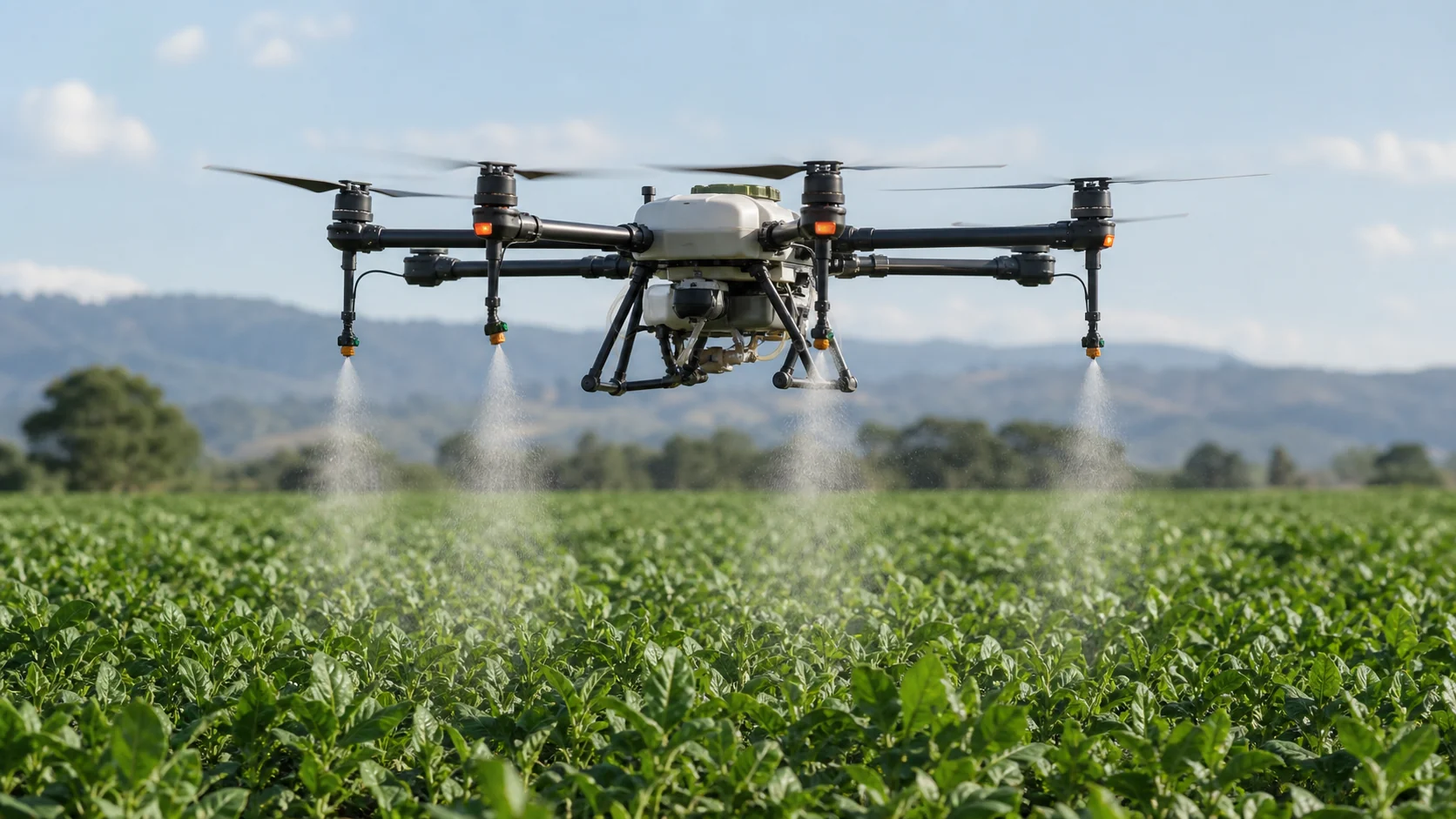
How Agricultural Spraying Drones Work: From Route Planning to Droplet Deposition
Agriculture Drones · Jul 31, 2026
Recommended
Agriculture Drone Payloads Explained: Spraying, Spreading, Mapping and Multispectral Imaging
Agriculture Drones · Jul 31, 2026
Recommended
Agriculture Drones in China: Technology, Applications and Operating Principles
Agriculture Drones · Jul 31, 2026
Recommended
How Many Hectares Can a 50L Agriculture Drone Spray Per Hour?
Agriculture Drones · Jul 29, 2026

Recommended
What Is Precision Agriculture? A Complete Guide for Modern Farming
Agriculture · Apr 12, 2026
Want outcomes like this?
Share your use case and we will map an implementation strategy with measurable operational milestones.