
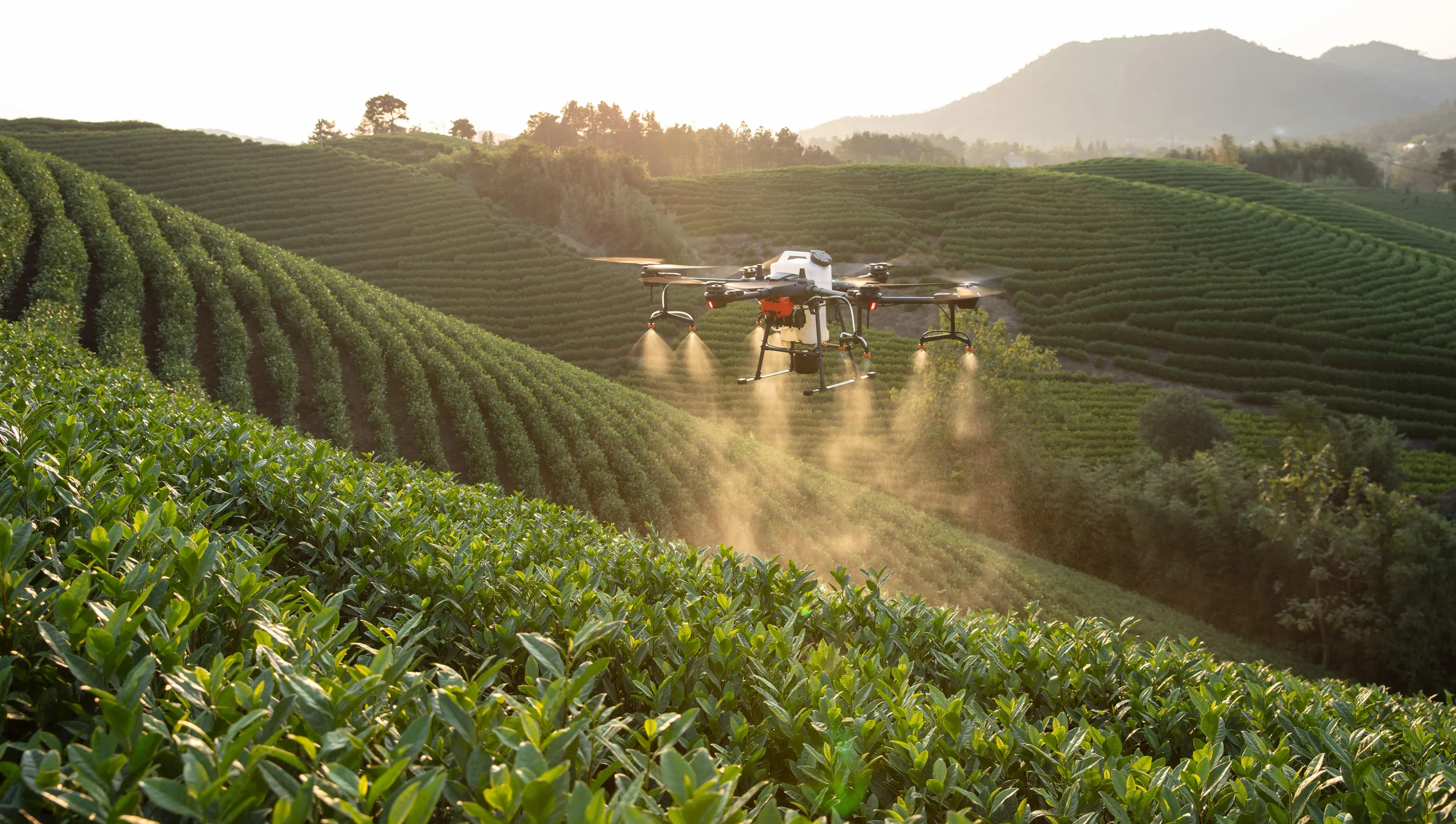
Agriculture Drone Manufacturer: 12 Questions Importers Should Ask Before Buying
A practical supplier-evaluation checklist for distributors, contractors, farms, and civil UAV project buyers.
July 28, 2026
Choosing an agriculture drone manufacturer is not only a product comparison. For an importer or distributor, the supplier becomes part of your delivery capability: specifications, documentation, batteries, chargers, spare parts, training, warranty handling, and technical response all affect whether the product can be sold and supported in your market.
A low quotation can become expensive when critical items are excluded, replacement parts take too long, manuals are incomplete, or the claimed field performance cannot be reproduced. The 12 questions below help buyers compare civil agriculture UAV suppliers on the complete operating system, not only tank size and price.
Buyer principle
Ask every shortlisted supplier to answer the same written questions and attach evidence. Comparable answers reveal more than separate sales presentations.
1. Under What Conditions Were the Specifications Measured?
Payload, endurance, spray width, flow, flight speed, and hectares per hour are meaningful only when the test conditions are known. Ask whether endurance is measured empty or fully loaded. Ask whether spray width is a maximum physical span or an effective width that produced acceptable coverage. Ask whether hourly output includes turns, refill, and battery handling.
Request a complete specification sheet with definitions and test conditions.
Ask for full-load and no-load figures to be separated.
Request field-test records for the crop and terrain closest to your market.
Treat 'up to' values as engineering limits until they are verified in an operating workflow.
2. What Exactly Is Included in the Quotation?
Two quotations with the same aircraft price may represent very different packages. Confirm whether the price includes batteries, chargers, remote controller, spray tank, spreading system, radar, RTK components, tools, cables, transport cases, software access, training, spare parts, and export packaging.
Ask for a line-item commercial invoice or pro forma invoice. It should identify model numbers, quantities, unit prices, optional items, Incoterms, payment terms, production lead time, warranty scope, and quotation validity. This reduces misunderstandings before the deposit is paid.
3. What Battery, Charging, and Field-Power System Is Required?
A spraying drone is productive only when the energy system keeps pace with the field cycle. Ask how many batteries are recommended per aircraft, how long charging takes under normal conditions, what charger input is required, and whether a generator or other field-power solution is needed.
Battery model, rated capacity, weight, and compatibility
Recommended battery quantity for continuous operation
Charger model, input voltage, input power, and connector standard
Cooling time and operating-temperature guidance
Storage, transport, inspection, and end-of-life procedures
Replacement-battery availability and expected lead time
The supplier should help you size the energy system around the target hectares per day, not simply sell one aircraft and one battery.
4. Which Spare Parts Should Be Stocked Locally?
Downtime during a short spraying window can cost more than the part itself. Ask the manufacturer to propose a starter spare-parts package based on the number of aircraft, seasonal utilization, field conditions, and local shipping time.
The list may include propellers, motors, pumps, nozzles, hoses, filters, landing gear, arms, connectors, seals, fasteners, and other wear or impact-prone components. Ask which repairs can be completed by a trained local technician and which require factory service. Also request part numbers, diagrams, prices, minimum order quantities, and normal lead times.
5. Is the Platform Matched to the Crop, Terrain, and Application Rate?
A large tank is not automatically the best choice. Open rice or wheat fields, oil palm plantations, orchards, terraces, and fragmented vegetable plots create different requirements for spray width, terrain following, droplet control, transport, and turning space.
Send the supplier a simple operating profile: crop, canopy, field size, slope, obstacles, water source, application rate, expected daily area, transport method, and local climate. Ask the supplier to explain why the proposed model and configuration fit that profile. A good answer should discuss trade-offs, not only advantages.
6. How Are Flight Control, Software, and Data Access Supported?
Confirm the flight controller, mission-planning software, remote-controller interface, map requirements, account setup, firmware process, supported languages, and data-export options. Ask whether any recurring subscription, online activation, or region-dependent service is required.
For distributors, software support affects every customer. Clarify how faults are diagnosed, how logs are shared, who authorizes firmware updates, and whether older aircraft remain supported after a new model is released. If remote services are unavailable in part of your market, ask what offline workflow is supported.
7. What Quality-Control and Pre-Shipment Tests Are Performed?
Ask for the manufacturer's standard inspection checklist. It should identify what is tested at the component, assembly, and completed-aircraft stages. Depending on the model, this may include frame inspection, motor and propulsion checks, pump and nozzle tests, communication checks, sensor calibration, battery inspection, hover or flight testing, and packing verification.
For a larger order, agree in writing on acceptance criteria and the evidence supplied with each batch. Serial-number records, inspection results, packing photos, and a sample pre-shipment video can make receiving and warranty handling more efficient. Independent inspection may also be appropriate when the order value or project risk justifies it.
8. Which Export, Import, and Compliance Documents Can Be Supplied?
The buyer remains responsible for confirming local import, aviation, radio, battery, chemical-application, and operator requirements. However, the manufacturer should clearly state which product and shipping documents it can provide.
Commercial invoice, packing list, and certificate of origin where applicable
Product specification, serial-number list, user manual, and maintenance information
Battery transport documentation and packaging information required by the selected carrier
Available conformity or test documents, with exact model coverage and issuing organization
HS code suggestion, while recognizing that final classification belongs to the importer and customs authority
Supported Incoterms and clear responsibility for freight, insurance, import clearance, duties, and inland delivery
Do not accept a general statement such as 'certified' without seeing the document and confirming that the model, standard, date, and issuing body match your requirement.
9. What Training and Documentation Are Included?
Training should cover more than takeoff and landing. Ask for a written syllabus that includes assembly, inspection, calibration, route planning, spray setup, cleaning, battery handling, emergency procedures, maintenance, troubleshooting, and safe chemical workflow.
For a distributor, also ask whether technician training, sales-engineering support, editable product materials, and train-the-trainer options are available. Confirm training language, delivery method, duration, class size, location, and whether travel costs are included. Manuals and videos should match the exact model and software version being delivered.
10. How Do Warranty, Technical Support, and RMA Work?
A warranty statement is useful only when the process is clear. Ask when the warranty begins, how long it lasts, which components are covered, which consumables are excluded, and how damage caused by operation, impact, water, chemicals, or unauthorized modification is handled.
Support channel and normal response window
Evidence required for diagnosis, such as photos, video, logs, and serial numbers
Who pays shipping for returned or replacement parts
Whether advance replacement is available for critical parts
How batteries and electronic components are handled
Escalation route when remote troubleshooting does not resolve the fault
Request the warranty and RMA policy before ordering, not after a problem occurs.
11. What Can Be Customized, and What Are the MOQ and Lead Time?
Customization can range from logo and packaging to spray-system configuration, controller language, accessory bundles, training materials, payload integration, and project-specific engineering. Ask which changes are standard options and which require development work.
For each requested change, confirm minimum order quantity, engineering fee, sample process, approval milestone, production lead time, effect on warranty, spare-parts compatibility, and ownership of any new tooling or documentation. Avoid changing too many items in the first order. A pilot batch with defined acceptance criteria is usually easier to validate and support.
12. What Distributor or Project-Cooperation Model Is Available?
If you plan to resell or deliver projects, ask what the manufacturer expects from a local partner and what support it can provide. Territory protection, annual targets, pricing levels, demonstration units, spare-parts stock, training obligations, marketing materials, and lead handling should be discussed directly.
Be cautious with exclusivity before both parties have proven demand and service capability. A staged model can begin with a pilot order or project, then expand after sales, technical support, payment, and market feedback are demonstrated. The agreement should define measurable conditions rather than rely on broad promises.
A Simple Agriculture Drone Supplier Scorecard
Use a weighted scorecard so price does not hide operational risk. The weights below are a starting point and should be adjusted to your business model.
Application fit and verified specifications - Suggested weight: 20%; Evidence to request: Test conditions, field records, configuration explanation
Quality control and product consistency - Suggested weight: 15%; Evidence to request: Inspection checklist, serial records, sample or pilot batch
Spare parts and serviceability - Suggested weight: 15%; Evidence to request: Parts list, prices, lead times, repair scope
Battery and charging workflow - Suggested weight: 10%; Evidence to request: Energy-system calculation, manuals, replacement plan
Training and technical support - Suggested weight: 10%; Evidence to request: Syllabus, support process, response expectations
Documentation and import readiness - Suggested weight: 10%; Evidence to request: Document pack, Incoterms, battery shipping details
Commercial terms and total landed cost - Suggested weight: 15%; Evidence to request: Line-item quote, MOQ, lead time, payment terms
Partner fit and communication - Suggested weight: 5%; Evidence to request: Clear responsibilities, escalation contacts, pilot plan
Red Flags Before You Pay a Deposit
The supplier will not define the conditions behind payload, endurance, or hectares-per-hour claims.
The quotation does not identify included batteries, chargers, accessories, or trade terms.
Model numbers on manuals, certificates, and the quotation do not match.
Spare-parts prices and lead times are unavailable.
Warranty coverage is described verbally but not provided in writing.
The supplier recommends a model without asking about crop, field, application rate, or daily target.
Large exclusivity or minimum-order commitments are requested before a pilot is validated.
Payment is requested to an account that does not match the contracting company without a clear, verified explanation.
How Stroni Supports Civil Agriculture UAV Buyers
Stroni works with importers, distributors, agricultural service providers, plantations, and project buyers that need civil UAV platforms for spraying, spreading, crop monitoring, and related precision-agriculture workflows. Depending on the project, the discussion can cover platform selection, payload configuration, batteries and charging, spare parts, training, documentation, pilot orders, and distributor cooperation.
To receive a more relevant recommendation by email, send your country, crop, typical field size and terrain, customer type, preferred tank capacity, expected quantity, and target delivery schedule. We will use those details to narrow the configuration and prepare the next technical questions.
Related Stroni Resources

Frequently Asked Questions
What is this article about?
+
Compare agriculture drone manufacturers with 12 practical questions covering specifications, batteries, spare parts, training, warranty, documentation, quality control, and importer support.
Who is this for?
+
It is written for teams planning, operating, or scaling enterprise drone workflows.
Where can I find related examples?
+
Use the related case studies and solutions on this page to review similar field applications.
Continue Exploring
Continue Exploring
Keep the momentum going with a few related reads selected to extend this topic into strategy, deployment, and practical field use.
Featured Read
19L vs 50L vs 100L Agriculture Spraying Drone: How to Choose the Right Model
Agriculture · Jun 30, 2026
Recommended
What Is Precision Agriculture? A Complete Guide for Modern Farming
Agriculture · Apr 12, 2026
Recommended
How Stroni UAV Is Rethinking Automated Drone Cleaning
Cleaning Drone · Sep 14, 2026
Recommended
How Much Does an Agricultural Spraying Drone Cost in 2026? Complete Price Guide
Agriculture Drones · Jul 3, 2026
Recommended
Agriculture Drone Payloads Explained: Spraying, Spreading, Mapping and Multispectral Imaging
Agriculture Drones · Jul 31, 2026
Want more industry insights?
Explore drone applications, implementation playbooks, and operational best practices with our editorial team.