How Stroni UAV Is Rethinking Automated Drone Cleaning
Discover how Stroni UAV’s H50 combines A–B route setup, high-pressure cleaning and integrated ground support to reduce work-at-height exposure and deliver more consistent, repeatable cleaning across facades, solar panels and industrial assets.
September 14, 2026
High-rise facades, solar modules, industrial roofs and large-scale facilities all require regular cleaning. Conventional access methods, however, continue to present three persistent challenges: exposure to work-at-height hazards, lengthy site preparation and results that depend heavily on individual operator experience.
Built around the H50 cleaning drone, Stroni UAV’s automated drone cleaning solution brings together the aerial platform, high-pressure water supply, A–B point route setup, ground control, operator training and after-sales support in one operational package.
Its purpose is not simply to replace a cleaner with a drone. It is to move the work from manual, meter-by-meter control at height to a standardized process based on ground-level setup, automated execution and human supervision.
Why Conventional Drone Cleaning Still Depends on the Pilot
Fitting a drone with a cleaning nozzle solves the initial access problem: the spray system can reach a surface without placing a cleaner directly at height.
It does not, however, automatically standardize the cleaning process.
During a manually controlled drone-cleaning operation, the pilot may still need to manage:
Flight height and travel direction;
Stand-off distance from the target surface;
Cleaning speed and dwell time;
Overlap between adjacent passes;
The effect of high-pressure hose drag on the aircraft;
Building edges, protrusions and recessed areas;
Sudden wind changes and turbulence around structures.
This requires sustained concentration and continuous fine control. Different pilots may also maintain different speeds, distances and flight paths, potentially leading to missed areas, unnecessary overlap or excessive dwell time over one section.
In other words, reaching the surface is only half the problem. A scalable solution must also reduce dependence on continuous manual control throughout the cleaning process.
How A–B Point Cleaning Works
Stroni UAV’s automated cleaning approach uses A–B point route setup to convert a target surface into a clearly defined cleaning task.
A typical workflow is as follows:
The operator positions the drone at the starting point of the cleaning segment.
This position is recorded as Point A.
The drone is moved to the corresponding endpoint or task boundary.
This position is recorded as Point B.
The team configures the applicable flight parameters, such as direction and working speed, together with cleaning-system settings such as pressure, flow and nozzle selection.
Once the task boundary and operating parameters have been confirmed, the system executes the predefined A–B cleaning task.
The remote pilot supervises the operation from the ground and remains ready to pause or take manual control when required.
Where supported by the selected control mode, additional settings such as spacing between cleaning passes may also be configured.
Larger facades or industrial surfaces can be divided into multiple cleaning zones, with a separate A–B task defined for each zone. This makes it easier to manage hose movement, avoid complex structural features and inspect completed work in stages.
The overall process can be summarized as:
Site survey → Test cleaning → Divide the surface into zones → Define Point A → Define Point B → Confirm cleaning parameters → Execute the task → Supervise the operation → Inspect the results
What A–B Automation Changes in Practice
1. Less Continuous Pilot Input
Once the A–B task and operating parameters have been configured, the pilot no longer needs to guide every meter of the cleaning pass manually.
The pilot’s role shifts from continuous fine control to task setup, operational supervision, safety management and exception handling. This can reduce the workload and fatigue associated with repetitive precision flying.
2. Reduced Reliance on Direct Work at Height
Conventional facade cleaning often requires personnel to reach the surface using rope access, suspended platforms or mobile elevated work platforms.
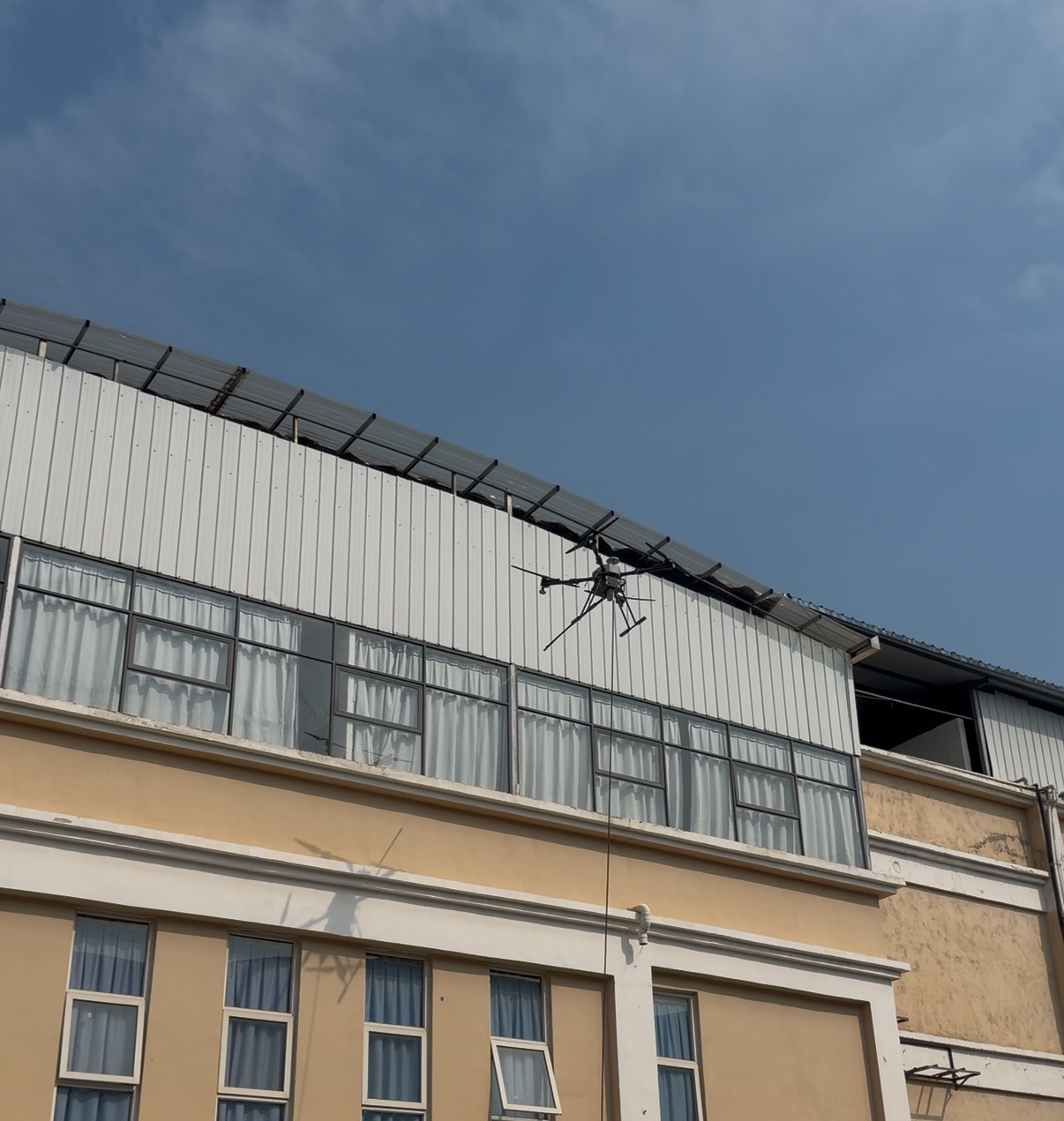
A cleaning drone carries the spray system to the target surface, allowing more of the operating team to remain at ground level while managing water supply, hose movement, equipment status and site safety.
Automation does not eliminate the need for qualified personnel, but it can reduce the amount of time people spend directly exposed to work-at-height hazards.
3. More Consistent Cleaning Passes
Manual results can vary according to pilot experience, concentration and fatigue. By applying predefined task boundaries and operating settings, A–B cleaning can support more consistent movement across multiple work zones.
This can help reduce:
Missed areas;
Unnecessary overlap;
Uneven travel speed;
Excessive dwell time over one section;
Differences between operators or work crews.
Consistent movement does not guarantee a uniform result on every surface. Cleaning quality still depends on the correct combination of pressure, flow, nozzle, stand-off distance and travel speed.
4. Greater Repeatability for Recurring Projects
Automated drone cleaning is particularly valuable for assets that require scheduled maintenance, such as building facades, solar arrays and industrial structures.
Once a team has validated the cleaning zones, operating parameters and safety procedures for a site, those records can provide a useful starting point for future work. This makes recurring operations easier to plan, train and reproduce.
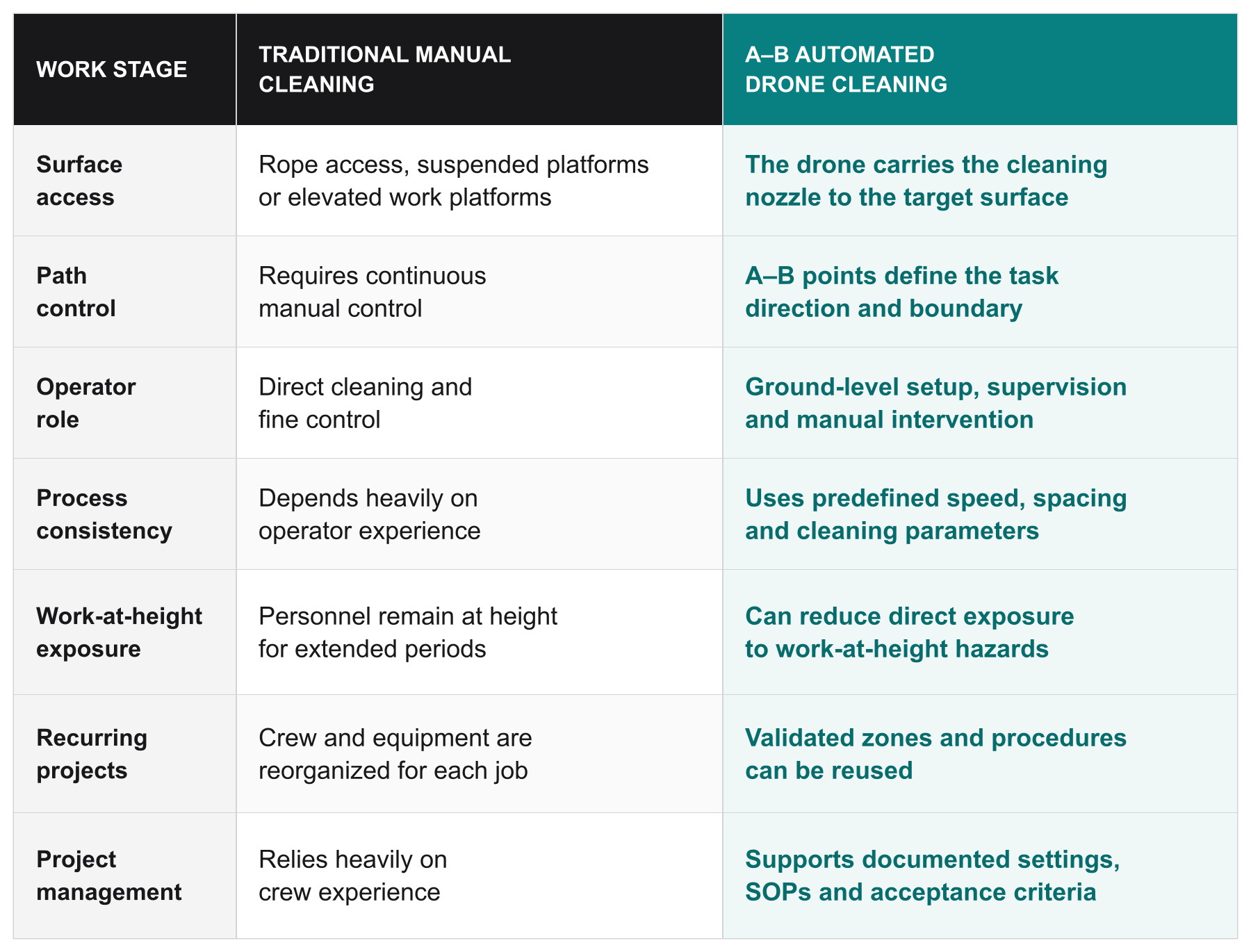
Conventional Cleaning vs. Automated A–B Drone Cleaning
How the H50 Supports Automated Cleaning Operations
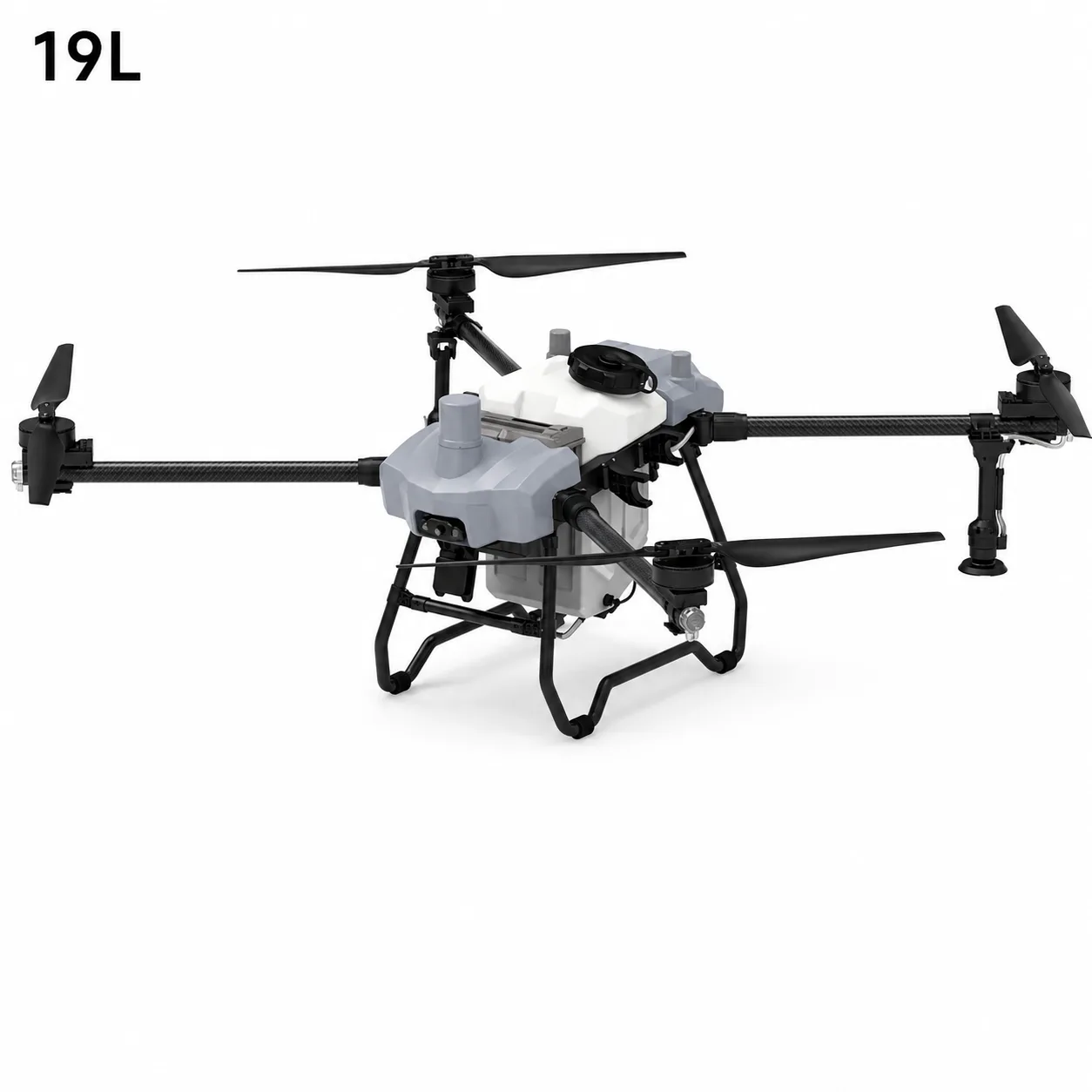
The H50 is not a conventional drone with a spray gun added as an afterthought. Its configuration is designed around cleaning payloads, pressurized water delivery, hose management and stable operation near large surfaces.
According to the current H50 specification sheet, key capabilities include:
Recommended working-height range: 0–200 m;
Specified operating time: approximately 50 minutes;
No-load flight time: up to 60 minutes;
Cleaning flow rate: 15–20 L/min;
Adjustable cleaning pressure: up to 340 bar;
Cleaning pump rating: up to approximately 5,000 psi;
Maximum flight speed: 11 m/s;
High-pressure hose: up to 200 m;
Water-inlet hose: 30 m;
Dual-antenna RTK;
C12 gimbal assembly;
Ground-sensing and obstacle-avoidance radar;
Configurable nozzle and cleaning-agent options;
Optional integrated ground support unit.
These figures should be understood as system capabilities rather than universal operating settings.
The maximum flight speed, for example, is not the recommended cleaning speed. Cleaning speed must be determined according to the surface material, contamination level, spray width and required finish.
Similarly, the maximum pressure rating should never be treated as the default setting. Glass, sealants, coatings, PV modules, stone and metal surfaces all have different pressure tolerances. The correct pressure must be established through representative test cleaning.
Actual nozzle pressure can also vary with hose length, working height, nozzle selection and site conditions.
Dual-antenna RTK provides a stable position-and-heading reference for A–B task setup and repeatable operation when suitable satellite reception and RTK corrections are available. It should not be interpreted as a guarantee of identical positioning in every environment.
Ground-sensing and obstacle-avoidance radars support situational awareness during close-proximity operations. They do not replace site inspection, visual monitoring or pilot intervention.
Completing the System with an Integrated Ground Support Unit
An automated cleaning system cannot be evaluated solely by looking at the aircraft.
Water availability, pressure output, hose deployment, cleaning-agent dosing and equipment mobility can all affect site productivity. In many projects, these ground-side factors become operational constraints before the aircraft itself does.
Stroni UAV can configure the H50 solution with an integrated ground support unit incorporating:
Water pump and pressure-boosting system;
Water tank or flexible reservoir;
Inlet and high-pressure hoses;
Detergent dosing and mixing;
Mobile trolley;
Hose, equipment and accessory storage.
The drone handles positioning and spraying in the air. The ground unit provides stable water flow and pressure. The operating team manages task settings, hose movement, site safety and quality control.
Together, these elements create a mobile cleaning system rather than a standalone aircraft.
From Site Survey to Deployment: A Practical Workflow
Step 1: Collect the Site Data
Before proposing a configuration, the project team should confirm:
The type of asset and surface material;
Building or structure height;
Approximate cleaning area;
Type and severity of contamination;
Available water and power;
Equipment parking and take-off locations;
Surrounding obstacles;
Pedestrian and vehicle activity;
Drainage and wastewater requirements;
Local UAS and work-site restrictions;
The customer’s cleaning and acceptance criteria.
Site photographs, recent video and structural drawings can significantly improve the initial assessment.
Step 2: Conduct a Representative Test Clean
A representative, lower-risk area should be tested before full deployment.
The purpose of test cleaning is not to demonstrate maximum pressure. It is to establish a suitable combination of:
Nozzle type;
Working pressure;
Flow rate;
Stand-off distance;
Travel speed;
Cleaning agent, where required.
Special care should be taken with glass, aged sealants, coated surfaces, PV modules and sensitive metal finishes. Applicable manufacturer maintenance requirements should also be reviewed.
The approved test result becomes the project’s initial cleaning specification.
Step 3: Divide the Surface into Cleaning Zones
The target surface should be divided according to its structure, surrounding obstacles, hose movement and safe operating boundaries.
Large, regular surfaces are better suited to automated passes. Corners, recesses, balconies, protruding equipment and obstacle-dense areas may require separate zones, manual pilot control or a hybrid cleaning method.
Each zone can be assigned its own A–B task, cleaning direction and approved operating parameters.
Step 4: Execute Under Ground Supervision
Before starting, the team should inspect the aircraft, batteries, pump, hoses, nozzles, positioning status, communications, take-off area and exclusion zone.
During the cleaning task:
The remote pilot monitors aircraft position and behavior;
The ground-system operator manages water, pressure and hose movement;
The safety observer controls the exclusion area and monitors surrounding activity;
The project supervisor checks cleaning progress and surface condition.
If wind conditions change, water delivery becomes unstable, the hose snags or a person enters the work zone, the task should be paused and reassessed.
Step 5: Inspect, Document and Standardize
Each zone should be inspected after cleaning for missed areas, persistent contamination, incomplete edge coverage or signs of surface damage.
Where appropriate, the result should also be reviewed after water has drained or the surface has dried, rather than judging the finish only while it is wet.
Validated information can then be documented, including:
Cleaning-zone reference;
A–B task definition;
Nozzle selection;
Pressure and flow settings;
Stand-off distance;
Working speed;
Weather conditions;
Operating time;
Manual interventions;
Areas requiring a second pass.
These records help turn one successful project into a repeatable operating procedure.
Where Automated Drone Cleaning Works Best
Potential applications for the H50 include:
Building Facades and Curtain Walls
Large, relatively open facades can be divided into repeatable cleaning zones. Before deployment, the team should assess window openings, facade seals, external signage, decorative features and pedestrian areas.
Different materials—including glass, stone, coated panels and metal cladding—should not be cleaned using one universal pressure setting.
Solar Panels and PV Arrays
Utility-scale and rooftop solar installations often contain large numbers of repeated surface sections, making them suitable for a standardized cleaning workflow.
For PV modules, the objective is not maximum pressure. The process must protect the glass, frames, seals and electrical components while achieving the required cleaning result. Water quality, module temperature and the manufacturer’s maintenance requirements should also be considered.
Stroni UAV and its partners draw on practical field experience in applications including solar-panel cleaning.
Industrial Roofs and Large Structures
Factory roofs, industrial facades, storage tanks, silos and other large structures may be difficult or time-consuming to access using conventional equipment.
Projects involving oils, chemical deposits, corrosion or specialist coatings require additional assessment of cleaning-agent compatibility, runoff management and waste collection.
Bridges and Elevated Infrastructure
Selected bridge and elevated-infrastructure surfaces may also be suitable, subject to airspace, traffic-control, structural-access and site-safety requirements.
Recurring Maintenance Projects
Sites that require cleaning at regular intervals can benefit from documented zones, validated settings and a repeatable deployment process.
When a Hybrid Method Is More Appropriate
Automated drone cleaning is not suitable for every surface or every part of a structure.
A hybrid approach may be more appropriate where:
The surface contains deep recesses or complex corners;
Signage, cables, balconies or external equipment create dense obstacles;
Coatings, sealants or surface materials are deteriorated;
Loose components are present;
Strong or unpredictable turbulence develops around the structure;
Pedestrians or vehicles cannot be effectively separated from the work area;
Water, power or hose deployment is restricted;
Local regulations do not permit the proposed flight operation.
In these cases, the drone can handle large, regular sections while manual cleaning addresses corners, shielded areas or stubborn contamination.
The objective is not automation for its own sake. It is to apply each method where it delivers the best combination of safety, control and cleaning quality.
Reducing Manual Exposure—Not Removing Human Oversight
Automation does not remove people from the operation. It changes where their time and expertise are used.
Instead of spending long periods directly on the exterior of a building, personnel can take responsibility for:
A–B task setup;
Flight and cleaning parameter management;
Water-pressure and flow control;
Hose and equipment management;
Site safety and exclusion-zone control;
Cleaning inspection and acceptance;
Exception handling and manual intervention.
The practical value of automation lies in moving people away from the most repetitive and exposed part of the job—not in removing human judgment from the site.
For cleaning contractors, this can reduce dependence on large teams of experienced work-at-height personnel and make operating procedures easier to scale.
For property and facility managers, it can simplify the organization of high-risk exterior maintenance.
For distributors and local partners, it creates opportunities to provide training, maintenance and project support in addition to equipment sales.
Measure Project Value with Real Operating Data
The value of an automated cleaning solution should not be judged only by equipment price, maximum pressure or rated endurance.
A meaningful project assessment should consider:
Effective cleaned area per operating hour;
Setup and pack-down time;
Water consumption per unit of area;
Battery and equipment rotation;
Number of manual interventions;
Missed or reworked areas;
Personnel hours spent directly at height;
Consistency between operators and work crews.
A representative on-site trial provides a more reliable basis for estimating productivity and return on investment than a generic efficiency claim.
Every project is influenced by surface condition, contamination, wind, water availability, hose layout and acceptance requirements. Those variables should be measured rather than assumed.
More Than Hardware: Stroni UAV’s Project Delivery Approach
A cleaning drone that can take off successfully is only the beginning.
A project-ready automated cleaning solution should also include:
Initial site and application assessment;
Aircraft and ground-system configuration;
A–B task workflow design;
Nozzle, pressure and cleaning-agent recommendations;
Representative cleaning tests;
Quality-control and acceptance procedures;
Operator and maintenance training;
Spare-parts and consumables planning;
Production and delivery scheduling;
After-sales service and technical support.
Stroni UAV focuses not only on whether the aircraft can reach the target surface, but also on whether the site has stable water delivery, manageable hose routing, clear task zones, trained personnel and a practical inspection process.
Customers are not simply purchasing a drone that can spray water. They are investing in an operational capability that must be configured, deployed, supervised, maintained and repeated across real projects.
Moving from Person-Dependent Cleaning to Process-Driven Operations
The real value of drone cleaning is not merely placing a spray nozzle in the air. It is connecting route definition, flight control, pressurized water delivery, ground support and quality management in one executable process.
Through A–B task setup and supervised automation, Stroni UAV helps customers:
Reduce reliance on continuous manual flight control;
Reduce personnel exposure to work-at-height hazards;
Improve cleaning-path consistency;
Minimize missed areas and unnecessary overlap;
Make recurring projects easier to repeat;
Establish clearer training and acceptance standards.
Planning a Facade, Solar or Industrial Cleaning Project?
Share the following information with Stroni UAV:
Type of asset and project location;
Target working height;
Approximate cleaning area;
Surface material;
Type of contamination;
Available water and power;
Recent site photographs or video;
Local flight or site restrictions.
Our team can assess the application and recommend an appropriate H50 configuration, cleaning workflow, ground-support setup and project delivery plan.
About the Author:Wei Chen is the Chief UAV Engineer at Stroni, focusing on the architectural design and flight control system optimization of industrial multi-rotor platforms. Learn more →
Frequently Asked Questions
What is A–B point automated drone cleaning?
+
The operator records a start point and an endpoint to define a cleaning segment. Once the applicable operating parameters have been configured, the aircraft executes the predefined A–B task while the remote pilot supervises from the ground.
Does automated cleaning mean the drone is unattended?
+
No. This is supervised automation. Qualified personnel remain responsible for site assessment, task setup, water and hose management, safety monitoring, inspection and manual intervention.
Can a cleaning drone completely replace rope access or elevated platforms?
+
It can reduce the need for direct work at height on suitable, relatively open surfaces. Complex corners, recessed areas, dense obstacles or persistent contamination may still require a manual or hybrid method.
Is higher water pressure always better?
+
No. Pressure must be selected according to the surface, contamination, nozzle, stand-off distance and acceptance requirements. Representative test cleaning should be completed before full deployment.
How is drone-cleaning productivity estimated?
+
Productivity depends on the cleaning area, working height, surface condition, wind, water supply, hose deployment, battery rotation and inspection requirements. An on-site trial provides the most reliable basis for estimation.
Continue Exploring
Continue Exploring
Keep the momentum going with a few related reads selected to extend this topic into strategy, deployment, and practical field use.
Featured Read
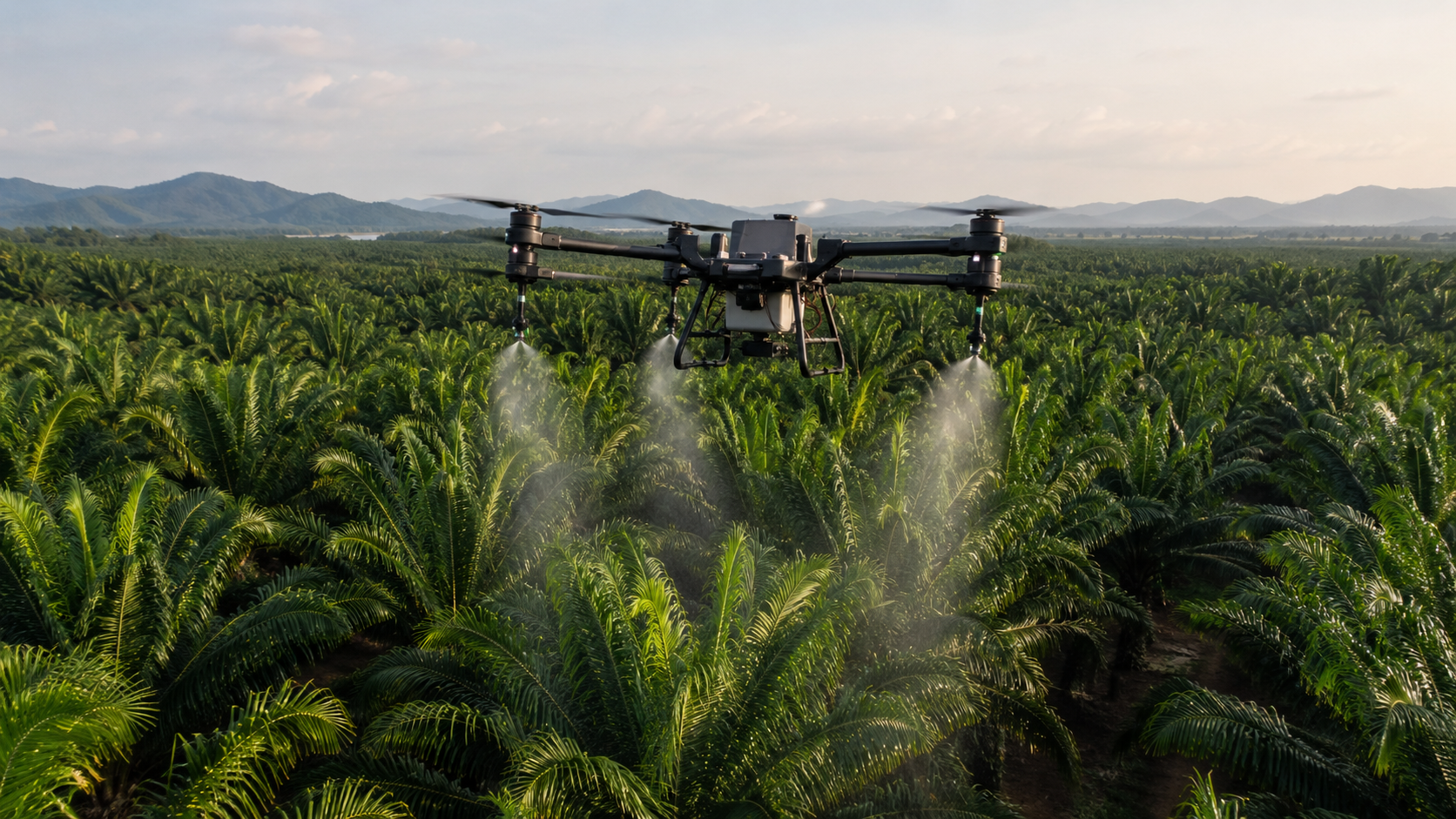
How Much Does an Agricultural Spraying Drone Cost in 2026? Complete Price Guide
Agriculture Drones · Jul 3, 2026
Recommended
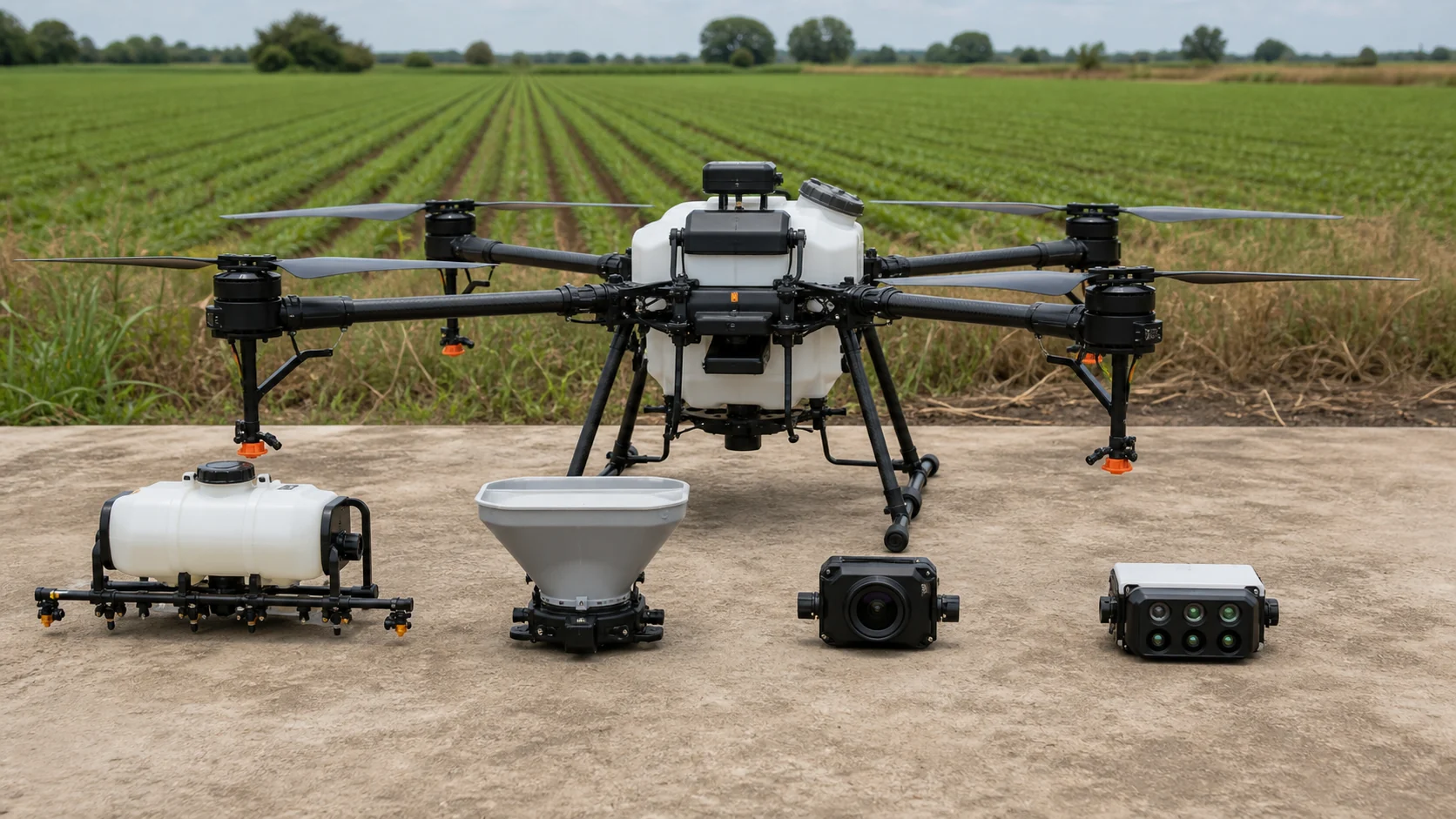
Agriculture Drone Payloads Explained: Spraying, Spreading, Mapping and Multispectral Imaging
Agriculture Drones · Jul 31, 2026
Recommended
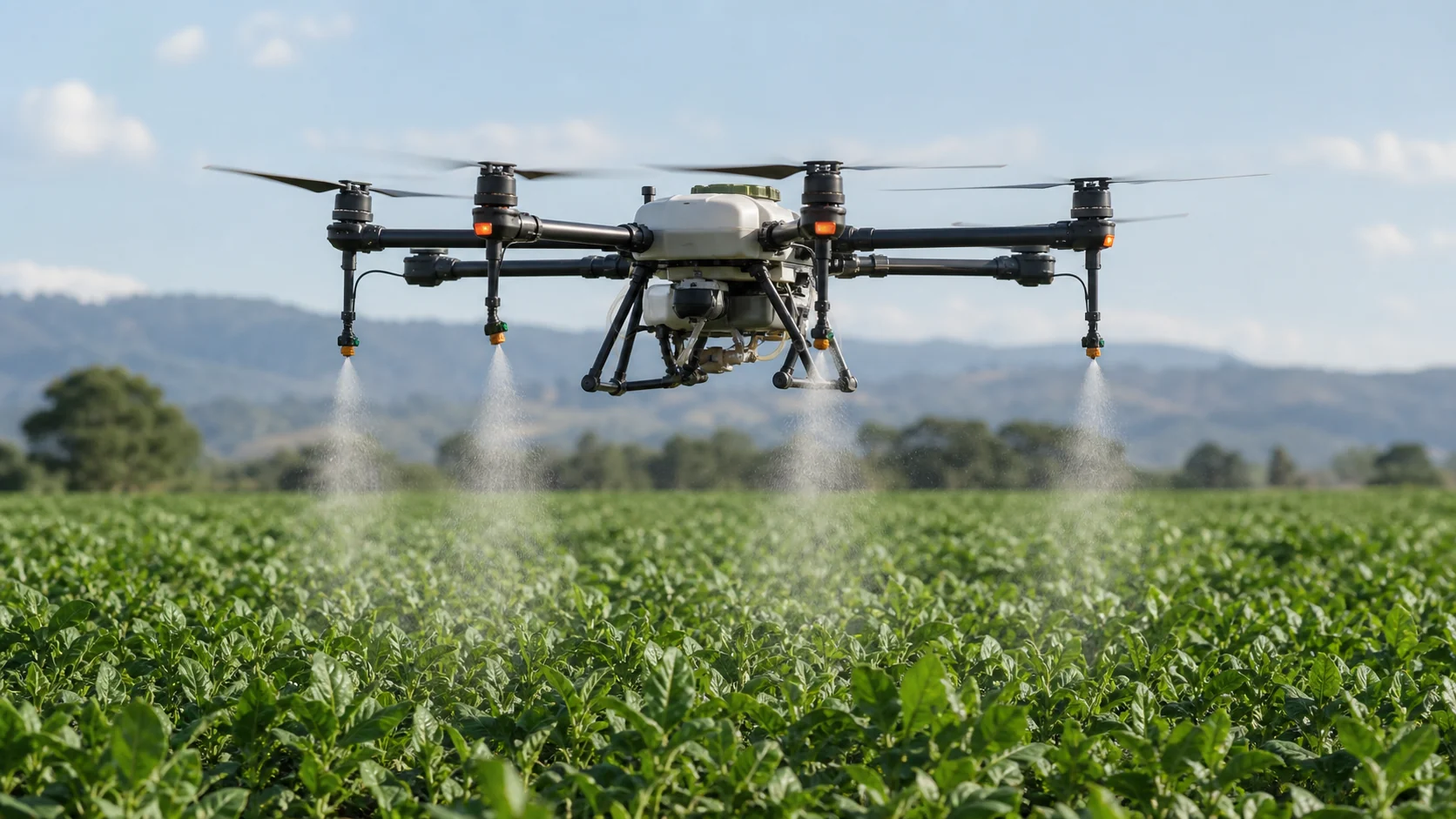
How Agricultural Spraying Drones Work: From Route Planning to Droplet Deposition
Agriculture Drones · Jul 31, 2026
Recommended
Agriculture Drones in China: Technology, Applications and Operating Principles
Agriculture Drones · Jul 31, 2026
Recommended
Agriculture Drone Cost per Hectare: Battery, Labor and ROI Calculator
Agriculture Drones · Jul 29, 2026
Want more industry insights?
Explore drone applications, implementation playbooks, and operational best practices with our editorial team.