How a Regional Grid Operator Cut Inspection Costs by 67% and Caught Faults It Never Knew It Had
An 18-month utility deployment showing how a regional grid operator improved defect detection, reduced inspection cost, accelerated reporting, and shifted maintenance upstream across 3,200 km of high-voltage infrastructure.
At A Glance
Industry
Power & Utilities
Asset Scope
3,200 km HV Lines
Fleet Size
6 UAVs
Programme
18 Months
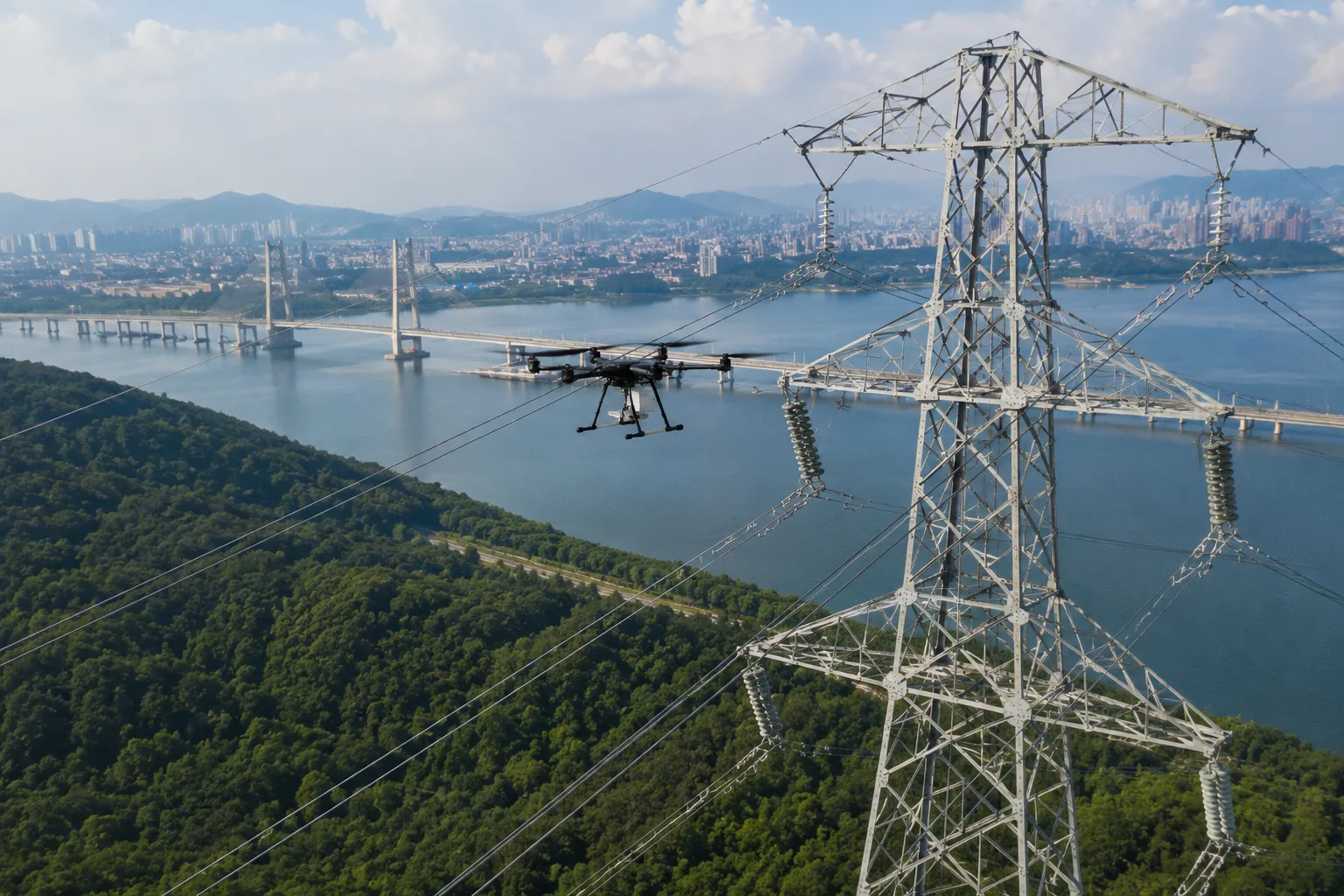
A regional grid operator responsible for more than 3,200 km of high-voltage transmission infrastructure needed more than better aerial imagery. It needed a way to shorten inspection cycles, increase detection confidence, and catch faults while corrective action was still inexpensive and easy to schedule. Over an 18-month programme using six aircraft and one software platform, the deployment changed both the speed and economics of utility asset monitoring.
The Challenge
The operator managed a network that crossed remote jungle, coastal terrain, and mountain corridors where conventional patrols depended on certified tower climbers, road access, and weather conditions that rarely aligned. Inspection cycles were long, coverage was inconsistent, and by the time a fault was confirmed, the low-cost intervention window had usually already closed.
The team was not lacking effort. It lacked a cost-effective way to inspect critical infrastructure at the frequency the network demanded. As a result, too many faults were discovered only after they had already become expensive to address.
"We didn't need another drone. We needed a system that could tell us something was wrong before it became a crisis and integrate into how we already work."
Director of Grid Integrity (anonymised)
The Stroni Solution
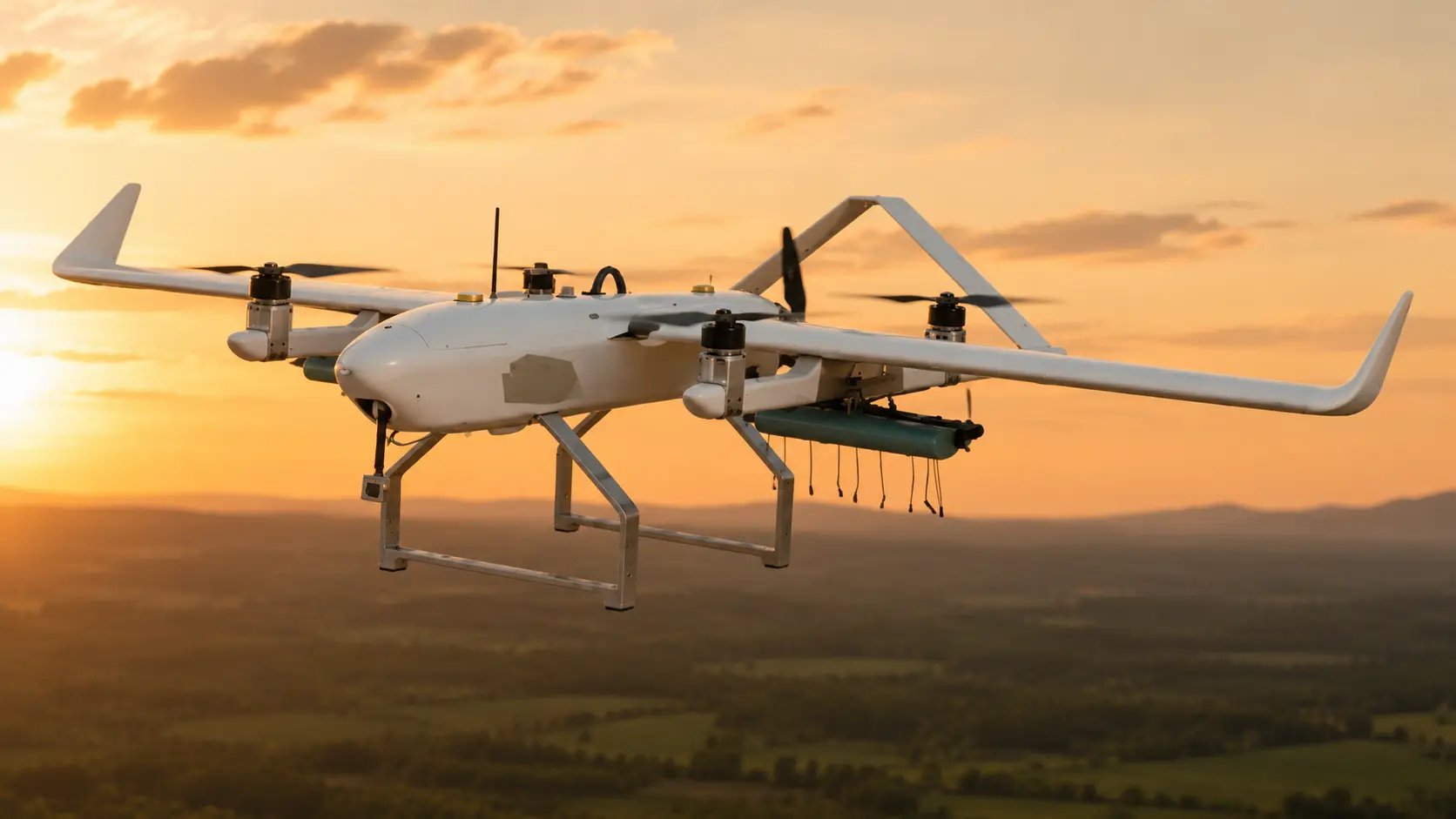
The operator selected Stroni's hybrid VTOL industrial inspection UAV as the primary fleet platform, paired with an end-to-end inspection software suite covering automated mission planning, onboard AI inference, structured reporting, and work-order dispatch. The objective was not simply longer flight time. It was to create a workflow that could move from corridor inspection to maintenance action with less delay and lower field risk.
The platform fit the mission because it combined corridor coverage, close-range inspection, and structured defect reporting in one deployment model. For teams evaluating similar programmes, our industrial inspection UAV buyer guide, our comparison of UAV and traditional inspection, and our industrial inspection solutions page provide a broader planning view.
Platform Specifications That Drove the Outcome
- Max endurance: 180 minutes, allowing a single sortie to cover up to 120 km of corridor while reducing battery swaps and field support interruptions.
- Operational range: 150 km, with a hybrid VTOL design that removed the usual trade-off between long transit capability and close-range hover inspection.
- Optical resolution: 61 MP stereo vision capable of resolving bolt-level defects from 50 m altitude in a single pass.
- Thermal accuracy: plus or minus 0.5 degrees C across synchronised optical and LWIR capture, with night missions reducing ambient infrared interference by 22%.
- AI detection performance: 96.3% across 37 transmission defect classes using onboard inference with no cloud dependency.
- Report turnaround: under 2 hours, including GPS coordinates, severity scoring, and API push into CMMS and asset management workflows.
Extended Endurance for Hard-to-Reach Utility Corridors
At 180 minutes per mission, a single aircraft covered what would otherwise take ground teams days to inspect. That mattered because travel time and access difficulty were major cost drivers across the operator's remote corridors. The hybrid VTOL architecture made the same aircraft effective for long-range line coverage and close inspection hover, reducing the need to choose between scale and detail.
AI Defect Detection That Moved Reporting Upstream
Onboard AI processed imagery during flight and flagged missing bolts, cracked insulators, conductor wear, and foreign-object intrusion across 37 defect classes. The Stroni software suite then converted those detections into structured, severity-ranked reports that could move directly into maintenance workflows. Instead of relying on slower manual review and fragmented reporting, the operator gained a faster path from image capture to actionable work order.
Thermal and Optical Fusion for Earlier Fault Visibility
Dual-channel capture made it easier to identify resistive heating at conductor joints, insulator leakage currents, and early-stage corrosion that conventional optical inspection could miss. Post-peak-load night missions improved thermal sensitivity further by reducing daytime solar interference. The value of the sensor stack was not just richer imagery, but earlier visibility into faults while intervention was still less disruptive and less expensive.
Outcomes Over 18 Months
The strongest business result was not only improved detection volume. It was the timing of detection. The operator identified more faults while they were still low-cost to remediate, which changed the economics of the entire maintenance programme.
For Operations Leadership
- $2.1M in year-one maintenance savings, driven by earlier intervention and lower reliance on emergency repair workflows.
- Emergency dispatch frequency reduced significantly, with planned maintenance remaining four to seven times less expensive than reactive repair.
- Zero crew safety incidents across 18 months, compared with two lost-time injuries in the equivalent prior period.
For Engineering and Operations Teams
- Defect detection rate increased from 58% to 94%.
- Early-stage faults rose from 22% to 61% of all detections, increasing the share of issues that could be resolved through lower-cost corrective work.
- Report turnaround fell to under 2 hours after landing, with fault GPS coordinates accurate to plus or minus 1.5 m.
- 94% defect detection rate
- 3.2x faster inspection cycle
- 67% reduction in crew field hours
- $2.1M year-one maintenance savings
The most consequential change was upstream detection. Once the majority of faults were being identified earlier, the operator could shift more work into scheduled maintenance rather than costly reactive dispatch. That is where the commercial return accumulated: not just in flying faster, but in acting sooner.
Performance figures reflect the first 18 months of deployment across the monitored transmission corridor.
Applicability
The capabilities demonstrated here are not specific to power transmission. Stroni's extended endurance, AI-driven defect recognition, and fused thermal imaging also translate directly to other infrastructure environments where assets are extensive, remote, or too hazardous for routine manual access.
- Power transmission and distribution
- Oil and gas pipelines
- Telecom towers and 5G masts
- Wind turbine blade inspection
- Solar farm hotspot detection
- Railway infrastructure
- Port and offshore platforms
Key Takeaway
For large utility operators, the value of an industrial inspection UAV is not limited to coverage. It comes from combining faster corridor inspection, earlier fault visibility, and structured reporting into a workflow that supports better maintenance timing and lower operational risk.
This case shows why UAV inspection becomes easiest to justify when it solves a business workflow problem rather than simply adding aerial imaging capacity. When platform performance, defect detection, and maintenance response are aligned, the result is not only better inspection coverage but a more efficient asset monitoring strategy overall.

Frequently Asked Questions
What made this deployment commercially valuable for the grid operator?
+
The biggest value came from identifying faults earlier, while corrective work could still be scheduled as lower-cost planned maintenance rather than emergency dispatch.
Why was a hybrid VTOL inspection UAV chosen for this programme?
+
Because the operator needed both long corridor range and close-range hover inspection across remote and uneven terrain without running separate platform types.
Can this inspection model apply outside utility transmission networks?
+
Yes. The same endurance, thermal visibility, and AI-supported reporting model also fits pipelines, telecom, wind, rail, ports, and other infrastructure-heavy inspection workflows.
Continue Exploring
Continue Exploring
Keep the momentum going with a few related reads selected to extend this topic into strategy, deployment, and practical field use.
Featured Read
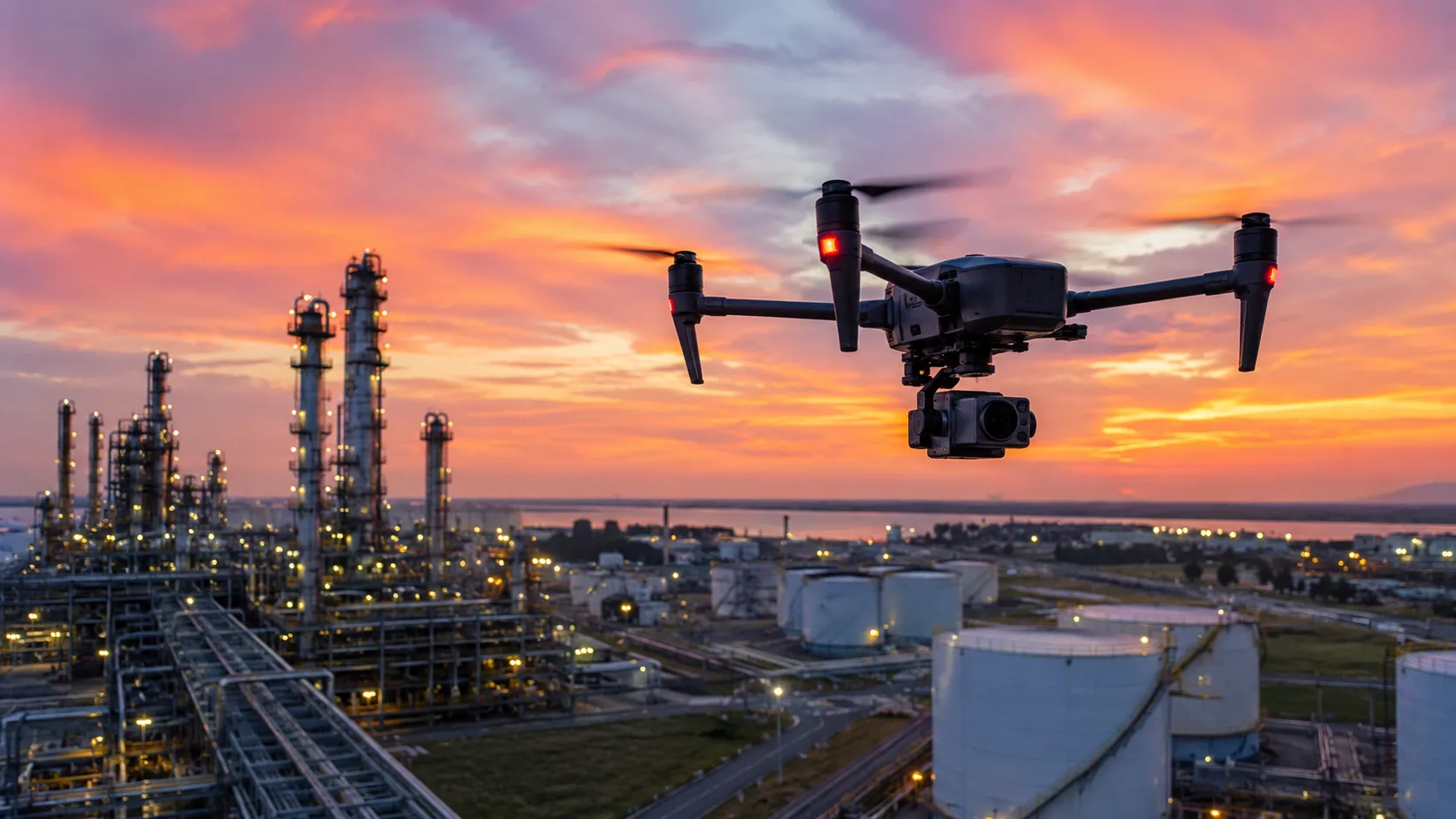
Why UAV Inspection Is Becoming Standard in Industrial Operations
Industrial Inspection · Mar 29, 2026
Recommended
What to Look for in an Industrial Inspection UAV
Industrial Inspection · Mar 21, 2026
Recommended
How Drones Fit Into Industrial Monitoring Workflows
Industrial Inspection · Apr 5, 2026
Recommended
How UAVs Reduce Time and Cost in Land Mapping Projects
Mapping & Surveying · May 8, 2026
Recommended
Why Security Teams Are Adding Drones to Industrial Monitoring Workflows
Industrial Security · May 4, 2026
Map Your Inspection Deployment
Tell us about your assets, inspection frequency, and data requirements to shape a practical UAV workflow for your team.